AC Fan vs. EC Fan vs. Brushless DC Fan: Which Cooling Solution Is Best for Industrial Applications?
Introduction – Choosing the Right Fan Matters More Than You Think
Cooling fans are often one of the smallest components inside industrial equipment, but they play a critical role in overall system reliability. Whether used in a control cabinet, HVAC system, marine electronics enclosure, radar equipment, or industrial automation platform, the right fan helps maintain stable operating temperatures and protects sensitive electronics from overheating.
When selecting a fan, engineers and purchasing teams are often faced with three common options:
- AC fans
- EC fans
- Brushless DC fans
Although these technologies all move air, they differ significantly in efficiency, controllability, operating characteristics, and suitability for different applications.
Understanding these differences helps OEM manufacturers and system integrators make better design decisions while improving long-term equipment reliability.
Understanding the Three Fan Technologies
AC Fans
AC fans are powered directly by alternating current, typically 115 VAC or 230 VAC. Their design is relatively simple and has been widely used for decades in industrial ventilation and commercial equipment.
Because the motor speed is tied to the power frequency, AC fans generally operate at a fixed speed unless used with additional control equipment.
Typical applications include:
- General ventilation
- Large HVAC systems
- Electrical rooms
- Industrial machinery
- Commercial refrigeration
AC fans remain a practical choice where variable speed control is not required and AC power is readily available.
EC Fans
Electronically Commutated (EC) fans combine an AC power input with an internal brushless DC motor and electronic controller.
This design offers higher motor efficiency while allowing variable speed operation without the need for external frequency converters.
Compared with traditional AC fans, EC fans typically provide:
- Improved energy efficiency
- Lower operating noise
- Better speed control
- Reduced operating costs
EC technology has become increasingly common in modern HVAC equipment, air handling units, and energy-efficient building systems.
Brushless DC Fans
Brushless DC (BLDC) fans are powered directly from a DC supply and use electronic commutation instead of mechanical brushes.
This design offers several advantages, including precise speed control, high efficiency, compact construction, and long service life.
Brushless DC fans are widely used where cooling performance and reliability are especially important.
Typical applications include:
- Industrial control cabinets
- Medical equipment
- Radar systems
- Marine electronics
- Airborne electronic equipment
- Communication systems
- Battery energy storage systems
- Industrial automation
For many OEM applications, brushless DC fans provide an effective balance between performance, reliability, and controllability.
Comparing AC, EC, and Brushless DC Fans
| Feature | AC Fan | EC Fan | Brushless DC Fan |
|---|---|---|---|
| Power Supply | AC | AC | DC |
| Speed Control | Limited | Excellent | Excellent |
| Energy Efficiency | Moderate | High | High |
| Noise Performance | Moderate | Low | Low |
| Maintenance | Low | Low | Low |
| Control Integration | Basic | Advanced | Advanced |
| Typical Applications | Ventilation | HVAC | Industrial Electronics |
Rather than one technology being universally better, the best choice depends on the operating environment and system requirements.
Selecting the Right Fan for Different Applications
HVAC Systems
Modern HVAC systems increasingly prioritize energy efficiency and intelligent airflow management.
EC fans are often selected because they support variable-speed operation and can automatically adjust airflow according to system demand, helping reduce energy consumption.
However, brushless DC fans are also commonly used in compact HVAC modules where DC power is already available.
Industrial Control Cabinets
Control cabinets typically contain power supplies, PLCs, inverters, and communication devices that generate continuous heat.
Because airflow paths are often restricted by filters and internal components, static pressure becomes an important consideration.
Brushless DC axial fans with PWM speed control allow airflow to be adjusted based on internal cabinet temperature, improving cooling efficiency while reducing unnecessary energy consumption.
Marine Ventilation
Shipboard electronics face challenges such as salt-laden air, humidity, vibration, and continuous operation.
In these environments, corrosion resistance and long-term reliability are often more important than maximum airflow alone.
Depending on installation requirements, marine ventilation systems may benefit from fans with:
- Corrosion-resistant materials
- Conformal-coated electronics
- High ingress protection
- Stable performance under vibration
Radar and Electronic Equipment
Radar processors, communication equipment, and electronic control systems frequently operate for extended periods while generating significant heat.
Reliable cooling contributes to maintaining stable operating temperatures and may help improve overall system reliability.
For these applications, engineers often consider factors such as:
- Stable airflow
- High static pressure
- Wide operating temperature range
- Low vibration
- Speed monitoring
- Alarm outputs
Important Factors Beyond Airflow
Airflow is only one part of fan selection.
Several additional factors should also be evaluated.
Static Pressure
Filters, heat sinks, protective grilles, and narrow airflow channels create resistance.
Selecting a fan solely by its free-air airflow rating may result in insufficient cooling once installed.
Reviewing the fan’s performance curve under actual system resistance provides a more accurate assessment.
Operating Temperature
Ambient temperature directly influences motor performance, bearing life, and electronic components.
Applications in outdoor equipment, industrial facilities, or enclosed cabinets often require fans designed for wide operating temperature ranges.
Bearing System
Bearing selection affects operating life, vibration, and maintenance intervals.
Dual ball bearings are commonly selected for industrial equipment requiring continuous operation or elevated ambient temperatures.
Speed Control
PWM or analog speed control enables the fan to respond dynamically to changing thermal loads.
This approach may reduce power consumption, lower acoustic noise, and extend service life by avoiding unnecessary operation at maximum speed.
Monitoring Functions
Many industrial systems now incorporate predictive maintenance strategies.
Optional tachometer outputs, locked-rotor alarms, or communication interfaces allow cooling performance to be monitored as part of overall equipment diagnostics.
How SenharFans Supports OEM Customers
At SenharFans, we understand that fan selection involves more than choosing a standard catalog product.
Every application presents unique airflow requirements, environmental conditions, installation constraints, and reliability expectations.
We work closely with OEM manufacturers and system integrators to support product development through:
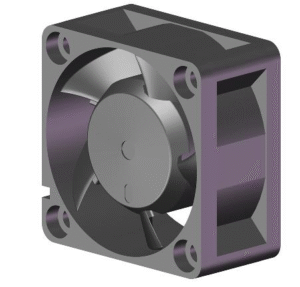
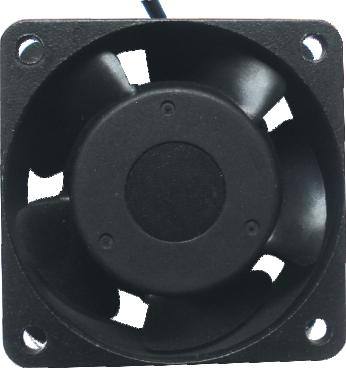
- Brushless DC axial fans
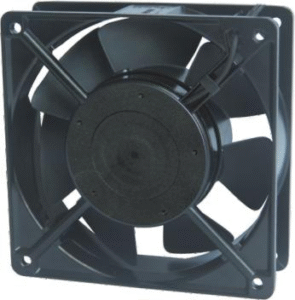
- AC axial fans
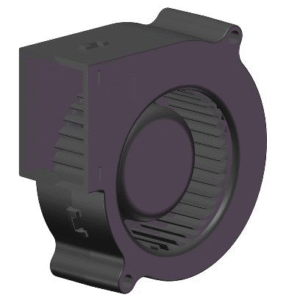
- DC blower fans
- OEM and ODM customization
- Multiple voltage options
- PWM speed control
- Tachometer and alarm outputs
- Optional IP-rated protection
- Conformal coating for harsh environments
Our engineering team also provides application guidance during the product selection process to help customers identify appropriate cooling solutions based on their operating conditions.
Choosing a Long-Term Cooling Partner
When selecting an industrial fan supplier, purchase price is only one consideration.
Long-term value also depends on consistent manufacturing quality, technical support, product availability, and the ability to support future design updates.
For OEM projects with extended product lifecycles, working with a supplier that understands thermal management can simplify development while improving long-term equipment reliability.
Conclusion
There is no single cooling fan that is ideal for every application.
AC fans, EC fans, and brushless DC fans each offer distinct advantages depending on the available power source, environmental conditions, efficiency goals, and system requirements.
By evaluating airflow, static pressure, operating environment, controllability, and long-term reliability together, engineers can make more informed cooling decisions.
Whether your project involves industrial automation, HVAC systems, control cabinet cooling, marine ventilation, radar equipment, or other demanding electronic applications, selecting the right thermal management solution is an important step toward reliable system performance.
Contact SenharFans
Looking for a reliable OEM fan supplier or a customized thermal management solution for your next project?
Our engineering team supports OEM manufacturers, distributors, and industrial system integrators with application-oriented cooling solutions designed for demanding environments.
Email: sales@senharfans.com
Website: https://senharfans.com
We welcome your technical inquiries and are happy to discuss airflow requirements, fan selection, and OEM customization options.