How to Choose the Right Cooling Fan for Industrial Equipment
Choosing the right cooling fan is a critical step in ensuring the reliability and performance of industrial equipment. In many electronic systems, improper cooling can lead to overheating, reduced efficiency, or even system failure.
Whether the application is in telecommunications, aerospace, control cabinets, radar systems, or power electronics, selecting the correct cooling fan requires careful consideration of several technical factors.
This guide explains the key parameters engineers and equipment manufacturers should consider when selecting an industrial cooling fan.
1. Airflow Requirement (CFM)
Airflow is usually the first parameter engineers consider when choosing a cooling fan.
It is typically measured in CFM (Cubic Feet per Minute) or m³/h.
Higher airflow helps remove heat faster from components such as:
-
power supplies
-
control boards
-
processors
-
communication modules
However, selecting a fan with excessive airflow can increase noise and power consumption.
Engineers should calculate the required airflow based on the system’s heat dissipation requirements.
2. Static Pressure
Static pressure determines the fan’s ability to push air through restricted environments.
In many industrial applications, airflow must pass through:
-
heat sinks
-
filters
-
protective grilles
-
narrow ventilation channels
In these cases, a cooling fan with higher static pressure capability is required to maintain effective airflow.
3. Fan Size and Mounting Space
Industrial equipment often has strict space limitations.
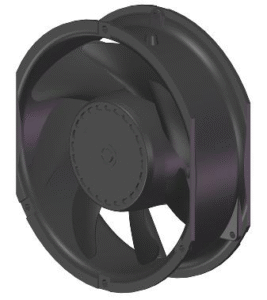
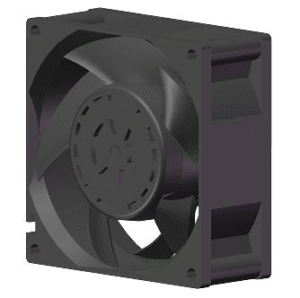
Common axial fan sizes include:
-
40mm
-
60mm
-
80mm
-
92mm
-
120mm
-
172mm
The available mounting space inside the equipment will determine the maximum fan size that can be installed.
Larger fans generally provide higher airflow at lower noise levels.
4. Voltage and Power Consumption
Cooling fans are available in different voltage configurations, such as:
-
12V DC
-
24V DC
-
48V DC
-
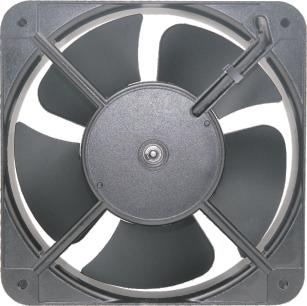
AC power fans
The selection depends on the power supply available in the equipment.
DC axial fans are commonly used in electronic equipment due to their high efficiency and precise speed control.
5. Reliability and Operating Life
For mission-critical applications such as:
-
radar systems
-
aerospace electronics
-
telecommunications equipment
-
industrial automation systems
fan reliability is extremely important.
Key factors affecting reliability include:
-
bearing type
-
motor design
-
operating temperature range
-
protection level
High-quality cooling fans typically use ball bearings, which provide longer service life compared to sleeve bearings.
6. Environmental Conditions
Industrial cooling fans may operate in challenging environments, including:
-
high temperatures
-
dust exposure
-
vibration
-
humidity
In these situations, selecting fans with high reliability design and protective features is essential.
7. Noise Considerations
In applications such as communication equipment and control rooms, noise levels may be an important factor.
Larger fans operating at lower speeds can often achieve better airflow-to-noise performance.
Conclusion
Selecting the right cooling fan requires balancing airflow, static pressure, reliability, and environmental requirements.
For industrial equipment manufacturers, choosing a reliable cooling fan supplier is also critical to ensure long-term system stability and performance.
If you are looking for high-reliability DC and AC axial cooling fans for industrial applications, feel free to contact the Senharfans engineering team for technical support and product recommendations.