Industrial Fan Selection Guide: Engineering the Right Cooling Solution for Your Application
Introduction: The Critical Impact of Proper Fan Selection
Selecting the wrong cooling fan can cascade into system failures, shortened equipment life, and thousands of dollars in downtime costs. Yet 70% of industrial cooling problems stem from improper fan selection during the design phase.
A major data center recently experienced $2.3M in losses due to inadequate cooling fans that couldn’t handle increased server loads. A marine electronics manufacturer recalled an entire product line when standard fans failed under salt spray conditions within six months.
The reality: Industrial fan selection isn’t just about moving air—it’s about matching precise engineering specifications to real-world operating conditions while optimizing for performance, reliability, and total cost of ownership.
This comprehensive engineering guide examines the critical factors that determine cooling success, analyzes fan technologies for different applications, and provides practical selection criteria to ensure optimal thermal management performance across industrial, marine, aerospace, and defense applications.
Understanding Industrial Cooling Requirements
1. Thermal Load Analysis Fundamentals
Heat Generation Sources:
- Electronic components: CPUs, power supplies, motor drives generating concentrated heat
- Industrial processes: Manufacturing equipment, chemical reactions, mechanical systems
- Environmental factors: Solar heating, ambient temperature variations, heat soak
- Operational heat: Equipment duty cycles, load variations, peak demand periods
Critical Temperature Considerations:
- Component temperature limits: Maximum allowable operating temperatures
- Thermal cycling effects: Expansion/contraction stress on electronic components
- Temperature gradients: Hot spot elimination and uniform temperature distribution
- Safety margins: Operating below critical temperature thresholds
2. Airflow Requirements Calculation
Airflow Formula Fundamentals:
Example Calculation:
- Electronic enclosure generating 500W heat
- Maximum allowable temperature rise: 20°C
- Required airflow: (500W × 3.16) / 20°C = 79 CFM minimum
Real-World Factors Affecting Airflow:
- Duct losses: Pressure drop through filters, grilles, and ductwork
- Installation effects: Mounting orientation and clearance restrictions
- Altitude adjustments: Reduced air density at elevation
- Temperature corrections: Air density variations with temperature
3. Operating Environment Assessment
Environmental Challenge Categories:
Standard Industrial:
- Temperature range: 0°C to +70°C
- Humidity: <85% RH non-condensing
- Contamination: Standard dust and particles
- Vibration: Normal industrial equipment levels
Harsh Industrial:
- Temperature range: -20°C to +85°C
- Chemical exposure: Corrosive gases, solvents, salts
- High contamination: Heavy dust, metallic particles
- Severe vibration: Heavy machinery environments
Marine/Offshore:
- Temperature range: -10°C to +60°C
- Salt spray: Continuous exposure to sodium chloride
- High humidity: 95% RH with condensation cycles
- Corrosive atmosphere: Accelerated corrosion rates
Military/Aerospace:
- Temperature range: -55°C to +125°C
- Altitude: Sea level to 50,000+ feet
- Vibration/shock: Military specification requirements
- EMI/RFI: Electromagnetic compatibility demands
Fan Technology Comparison: Axial vs. Centrifugal
Axial Flow Fan Technology
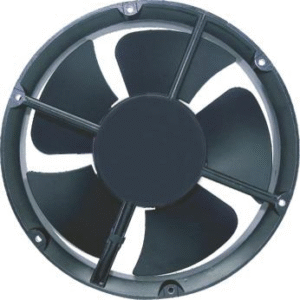
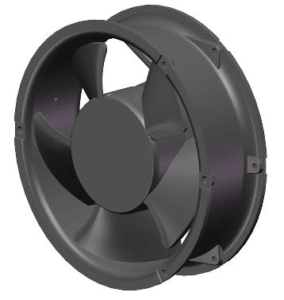
Operating Principle: Axial fans move air parallel to the fan shaft, providing high-volume airflow at relatively low pressure. Air enters and exits the fan in the same direction.
Optimal Applications:
- General ventilation: Large volume air movement
- Electronics cooling: Direct component cooling
- Heat exchanger cooling: Radiators and condensers
- Cabinet ventilation: Equipment enclosures and racks
Performance Characteristics:
- High airflow: 50-2000+ CFM depending on size
- Low to medium pressure: 0.1-2.0 inches H2O
- Compact design: Minimal depth requirement
- Direct drive efficiency: Lower power consumption
SenharFans Axial Product Range:
High-Performance 60mm Series:
- Model 6025: 25-35 CFM, ultra-quiet operation <28 dBA
- Model 6032: 35-45 CFM, extended temperature range
- Applications: Telecom equipment, medical devices, compact electronics
Standard 80mm Series:
- Model 8025: 35-50 CFM, balanced performance
- Model 8038: 55-75 CFM, high-pressure capability
- Applications: Computer systems, industrial controllers, small cabinets
Heavy-Duty 120mm Series:
- Model 12025: 85-120 CFM, industrial-grade construction
- Model 12038: 115-160 CFM, maximum airflow capability
- Applications: Server cooling, industrial equipment, large enclosures
Centrifugal Blower Technology
Operating Principle: Centrifugal fans draw air into the center of the impeller and accelerate it outward through curved blades, creating higher pressure capability.
Optimal Applications:
- Pressurized systems: Clean rooms, positive pressure applications
- Duct systems: Long ductwork runs with high pressure drop
- Filtration systems: Overcoming filter resistance
- Spot cooling: Directed airflow for specific components
Performance Advantages:
- High pressure capability: 2.0-15+ inches H2O
- Stable performance: Less affected by back-pressure
- Directional flexibility: 90-degree airflow change
- Variable speed response: Good modulation characteristics
SenharFans Centrifugal Solutions:
Compact Blower Series:
- Model 5015: 8-12 CFM at high pressure, precision cooling
- Model 7530: 25-35 CFM, medium pressure applications
- Applications: Component spot cooling, pressurized enclosures
Industrial Blower Series:
- Model 9733: 80-120 CFM, heavy-duty construction
- Model 12032: 150-200 CFM, maximum performance
- Applications: Large system pressurization, industrial ventilation
Material Selection and Environmental Protection
Standard Industrial Materials
Aluminum Frame Construction:
- Weight advantages: 40-60% lighter than steel equivalents
- Corrosion resistance: Natural oxide layer protection
- Thermal properties: Excellent heat dissipation capability
- Applications: Standard industrial environments
Plastic Hub/Blade Assemblies:
- Chemical resistance: Compatible with most industrial chemicals
- Noise reduction: Lower acoustic signature vs. metal
- Cost effectiveness: Economical for high-volume applications
- Applications: Electronics cooling, commercial HVAC
Advanced Protection Systems
Nano-Coating Technology:
- Multi-layer protection: Base layer + intermediate + topcoat
- Salt spray resistance: 500+ hour testing capability
- Chemical compatibility: Resistant to acids, bases, solvents
- Temperature stability: Coating integrity across thermal cycling
Conformal Coating Electronics:
- PCB protection: Circuit board environmental protection
- Moisture resistance: Prevents corrosion and short circuits
- Parylene coating: Molecular-level protection barrier
- Extended life: 3-5x improvement in harsh environments
Specialized Environmental Solutions:
Marine-Grade Protection:
- 316 stainless steel: Superior corrosion resistance
- Sealed bearing assemblies: Moisture and contamination exclusion
- IP65+ ratings: Complete protection from dust and water
- Sacrificial anodes: Galvanic corrosion prevention
High-Temperature Applications:
- Temperature capability: Continuous operation to 125°C
- Thermal-stable materials: Maintaining properties at temperature
- Thermal cycling resistance: Repeated heating/cooling cycles
- Insulation systems: Class H or higher motor windings
Performance Optimization and Control Systems
Variable Speed Control Benefits
Energy Efficiency Improvements:
- Cube law relationship: Speed reduction provides cubic power savings
- Example: 50% speed reduction = 87.5% power reduction
- Demand matching: Modulating cooling to match thermal loads
- Peak load management: Reducing power consumption during high-cost periods
Enhanced System Control:
- Temperature stability: Maintaining precise temperature control
- Noise reduction: Lower speeds decrease acoustic output
- Extended equipment life: Reduced mechanical stress
- Improved comfort: Eliminating temperature swings
Control Implementation Options:
PWM (Pulse Width Modulation):
- Simple implementation: Basic speed control capability
- Cost effective: Minimal additional electronics required
- Speed range: Typically 20-100% of maximum speed
- Applications: Basic temperature control systems
Analog Voltage Control:
- Smooth operation: Continuous speed variation
- Precise control: Fine temperature regulation capability
- Wide range: 10-100% speed control possible
- Applications: Critical temperature applications
Digital Communication Control:
- System integration: BMS and SCADA connectivity
- Monitoring capability: Real-time performance feedback
- Alarm functions: Status monitoring and fault detection
- Remote operation: Centralized control systems
Temperature Control Strategies
Fixed Speed Operation:
- Simplicity: No control electronics required
- Reliability: Minimal failure points
- Cost effectiveness: Lowest initial investment
- Applications: Constant load applications
Two-Speed Control:
- Load following: High/low speed based on demand
- Energy savings: Reduced power during low-load periods
- Simple implementation: Basic thermostat control
- Applications: Variable load systems
Proportional Control:
- Continuous modulation: Smooth temperature regulation
- Maximum efficiency: Optimized power consumption
- Advanced features: Set point programming and monitoring
- Applications: Precision temperature control
Application-Specific Selection Criteria
Electronics Cooling Applications
Server and Data Center Cooling:
Performance Requirements:
- High airflow: 100-300 CFM for rack-mount servers
- Static pressure capability: Overcoming filter and component resistance
- Low noise operation: <55 dBA for occupied spaces
- Reliability: 50,000+ hour operation capability
Recommended Solutions:
- 120mm high-performance fans: Models 12038-series for maximum airflow
- Redundant configurations: N+1 fan systems for backup cooling
- Variable speed control: Modulating airflow based on server load
- Hot-swappable designs: Field replacement without downtime
Telecommunications Equipment:
Special Considerations:
- Compact size constraints: Limited space for cooling equipment
- Ultra-low noise: <35 dBA for office environments
- High reliability: Carrier-grade performance standards
- Power efficiency: Minimizing heat generation
Optimal Fan Selection:
- 60-80mm compact fans: Space-efficient cooling solutions
- Low-speed operation: Optimized for quiet performance
- Extended temperature range: Wide operating envelope
- Long-life design: 100,000+ hour capability
Industrial Process Cooling
Motor Drive and Power Electronics:
Thermal Management Challenges:
- High heat density: Power semiconductors generating concentrated heat
- Temperature sensitivity: Performance degradation with overheating
- Continuous operation: 24/7/365 operational requirements
- Harsh environments: Industrial contamination and temperature extremes
Selection Strategy:
- High-pressure fans: Overcoming heat sink and filter resistance
- Robust construction: Industrial-grade materials and protection
- Easy maintenance: Accessible components for service
- Alarm integration: Temperature monitoring and fan failure detection
Control Panel and Enclosure Cooling:
Design Considerations:
- Positive pressure: Preventing contamination ingress
- Filtered air: Protecting sensitive electronics
- Uniform distribution: Eliminating hot spots within enclosure
- Condensation prevention: Managing humidity and temperature
Fan System Design:
- Intake/exhaust configuration: Balanced airflow through enclosure
- Filter compatibility: Adequate pressure to overcome filter loading
- Mounting flexibility: Top, side, or rear panel installation
- Maintenance access: Easy filter and fan replacement
Marine and Offshore Applications
Shipboard Electronics Cooling:
Unique Environmental Challenges:
- Salt spray exposure: Continuous sodium chloride contamination
- High humidity: 95%+ relative humidity with condensation
- Vibration and shock: Ship motion and wave impact
- Space constraints: Compact installation requirements
Marine-Optimized Solutions:
- Corrosion-resistant materials: 316 stainless steel or marine-grade aluminum
- Sealed construction: IP65+ protection against moisture ingress
- Shock mounting: Vibration isolation for sensitive equipment
- Emergency operation: Battery backup for critical systems
Offshore Platform Applications:
Extreme Environment Factors:
- Corrosive atmosphere: Accelerated corrosion from salt and chemicals
- Temperature extremes: Arctic conditions to desert heat
- High winds: Equipment must withstand severe weather
- Maintenance limitations: Extended periods without service access
Specialized Requirements:
- Extended service life: 5+ year maintenance intervals
- Redundant systems: Multiple backup cooling capabilities
- Remote monitoring: Satellite communication for status reporting
- Hazardous area compliance: ATEX/IECEx certification for explosive atmospheres
Quality Assurance and Testing Standards
Manufacturing Quality Control
SenharFans Quality Management:
- GJB9001C-2017: Military-grade quality management system
- ISO 9001:2015: International quality standard compliance
- Statistical process control: Real-time manufacturing monitoring
- Component traceability: Full supply chain documentation
Incoming Material Control:
- Component qualification: Vendor auditing and certification
- Material testing: Verification of specifications and properties
- Statistical sampling: Quality assurance through systematic testing
- Supply chain security: Controlled sourcing for critical applications
Production Testing Protocols
100% Performance Testing: Every fan undergoes complete performance validation before shipment:
Airflow Verification:
- CFM measurement: Precision airflow testing across pressure range
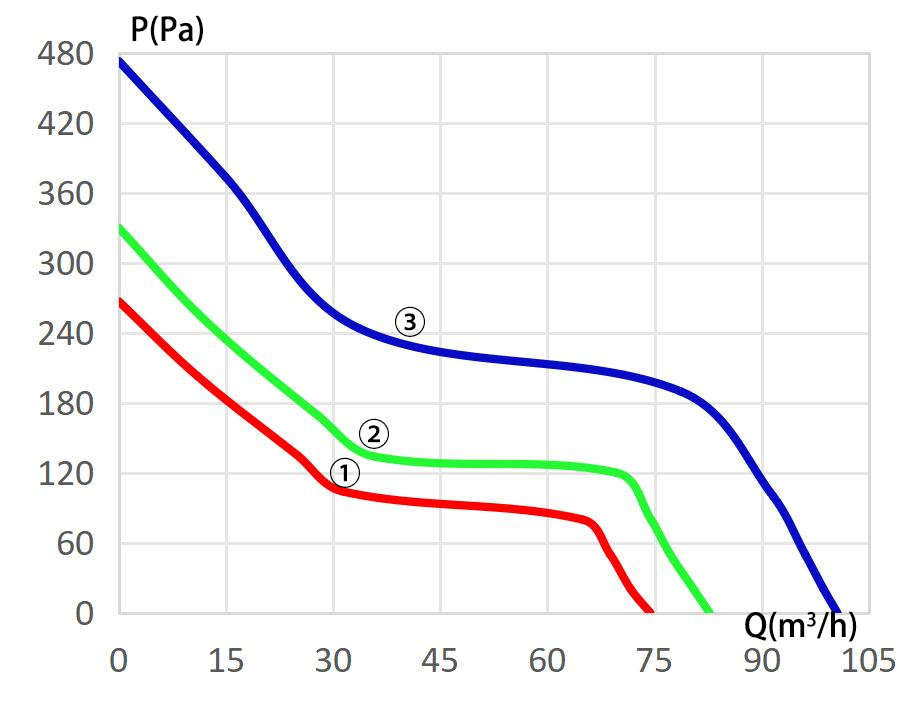
- Fan curve validation: Complete performance characteristic mapping
- Efficiency testing: Power consumption vs. airflow optimization
- Speed-torque testing: Motor performance verification
Environmental Testing:
- Temperature cycling: Operational verification across temperature range
- Vibration testing: Transportation and operational shock simulation
- Noise testing: Anechoic chamber acoustic measurement
- Electrical testing: Insulation resistance and dielectric strength
Reliability Validation:
- Burn-in testing: 48-hour operational stress testing
- Accelerated life testing: Elevated temperature and stress conditions
- MTBF calculation: Statistical reliability prediction
- Failure analysis: Root cause investigation and improvement
Certification and Compliance Standards
Industrial Standards Compliance:
- UL Recognition: Safety certification for electrical equipment
- CE Marking: European conformity declaration
- RoHS Compliance: Restriction of hazardous substances
- REACH Regulation: Chemical safety and registration
Military and Aerospace Standards:
- MIL-STD Environmental: Military specification environmental testing
- RTCA DO-160: Airborne equipment environmental testing
- NASA Standards: Space application qualification requirements
- Nuclear Standards: NQA-1 nuclear quality assurance
Total Cost of Ownership Analysis
Initial Cost Components
Fan Procurement Costs:
- Base unit price: Fan cost based on specifications and quantity
- Custom modifications: Engineering and tooling for special requirements
- Testing and validation: Performance and environmental verification
- Documentation: Certification and quality assurance records
Installation Considerations:
- Mounting hardware: Brackets, gaskets, and installation accessories
- Electrical connections: Wiring, connectors, and control integration
- System integration: BMS connectivity and monitoring setup
- Commissioning: Performance verification and optimization
Operational Cost Analysis
Energy Consumption: Power consumption represents the largest operational cost component:
Example Calculation (120mm Fan, 10-Year Analysis):
- Standard fan: 15W continuous operation
- High-efficiency fan: 12W continuous operation (20% savings)
- Annual energy cost difference: $50-75 depending on local rates
- 10-year energy savings: $500-750 per fan
Maintenance Costs:
- Routine service: Cleaning, lubrication, inspection intervals
- Replacement parts: Bearing replacement, motor rebuilding
- Labor costs: Technician time for maintenance activities
- Downtime costs: Production loss during maintenance periods
Reliability and Lifecycle Benefits
Failure Cost Avoidance:
- Emergency replacement: 3-5x normal procurement costs
- Expedited shipping: Rush delivery charges and logistics costs
- Downtime impact: Production loss and missed deliveries
- Cascading failures: Secondary equipment damage from overheating
SenharFans Reliability Advantage:
- Extended MTBF: 2-3x longer service life vs. standard fans
- Predictable maintenance: Scheduled service vs. emergency failures
- Warranty protection: Comprehensive coverage for defects
- Technical support: Engineering assistance throughout lifecycle
Selection Decision Framework
Step 1: Application Requirements Definition
Thermal Load Assessment:
- Heat generation calculation: Component and system thermal analysis
- Airflow requirements: CFM calculation based on temperature rise
- Pressure drop analysis: System resistance and static pressure needs
- Temperature specifications: Operating and survival temperature ranges
Environmental Conditions:
- Operating environment: Indoor, outdoor, marine, industrial classification
- Contamination exposure: Dust, chemicals, salt spray assessment
- Vibration and shock: Transportation and operational stress levels
- Altitude and climate: Elevation and atmospheric conditions
Step 2: Performance Specification Development
Fan Type Selection:
- Axial vs. centrifugal: Based on airflow and pressure requirements
- Size constraints: Physical space limitations and clearances
- Mounting orientation: Airflow direction and installation position
- Integration requirements: Electrical and control system compatibility
Operating Parameters:
- Speed control: Fixed speed vs. variable speed requirements
- Noise limitations: Acoustic requirements for installation environment
- Efficiency targets: Energy consumption and operating cost goals
- Reliability requirements: MTBF targets and maintenance accessibility
Step 3: Material and Protection Requirements
Environmental Protection:
- Standard vs. enhanced: Protection level based on environment
- Coating requirements: Corrosion resistance and chemical compatibility
- Ingress protection: IP rating for dust and moisture protection
- Temperature capability: Extended range for extreme conditions
Regulatory Compliance:
- Safety certifications: UL, CE, CSA requirements
- Industry standards: Military, marine, aerospace specifications
- Environmental compliance: RoHS, REACH, environmental regulations
- Quality requirements: Documentation and traceability needs
Step 4: Supplier Evaluation and Selection
Technical Capability Assessment:
- Engineering support: Application analysis and custom modification capability
- Testing facilities: Environmental and performance validation capability
- Quality systems: Manufacturing quality and documentation standards
- Product range: Complete solution capability vs. limited offerings
Business Relationship Factors:
- Technical support: Ongoing engineering assistance and troubleshooting
- Supply chain reliability: Delivery performance and inventory management
- Warranty and service: Coverage terms and field support capability
- Partnership approach: Long-term relationship vs. transactional supplier
Emerging Technologies and Future Trends
Advanced Motor Technologies
Magnetic Bearing Systems:
- Eliminating wear points: No physical contact during operation
- Ultra-long life: 200,000+ hour capability
- Variable speed range: 0-100% speed control
- Applications: Critical systems requiring absolute reliability
Integrated Smart Technologies:
- IoT connectivity: Real-time performance monitoring and analytics
- Predictive maintenance: AI-driven failure prediction and prevention
- Energy optimization: Machine learning for efficiency improvement
- Remote diagnostics: Cloud-based performance analysis
Sustainable Design Evolution
Environmental Responsibility:
- Energy efficiency: Continued reduction in power consumption
- Material sustainability: Recyclable and renewable material usage
- Lifecycle extension: Design for longer service life
- End-of-life management: Disassembly and material recovery
Circular Economy Integration:
- Modular design: Component replacement vs. complete unit replacement
- Remanufacturing programs: Factory rebuilding of returned units
- Material recovery: Recycling programs for aluminum and rare earth materials
- Carbon footprint reduction: Lifecycle environmental impact minimization
Why Choose SenharFans Industrial Cooling Solutions
Engineering Excellence and Innovation
- University partnerships: R&D collaboration with leading technical institutions
- Advanced simulation: CFD and FEA modeling for optimized designs
- Custom engineering: Full modification and development capability
- Technology leadership: Continuous innovation in materials and design
Manufacturing Quality and Reliability
- Military-grade quality: GJB9001C quality management system
- Advanced testing: Complete environmental and performance validation
- Supply chain control: Managed sourcing and component qualification
- Comprehensive warranties: Confidence in long-term performance
Application Expertise and Support
- Industry experience: 5+ years in critical cooling applications
- Technical consultation: Free application analysis and recommendations
- Field support: On-site commissioning and optimization assistance
- Training programs: Customer technical education and certification
Global Reach and Local Support
- International presence: Serving customers worldwide
- Responsive support: Quick technical assistance and problem resolution
- Supply chain flexibility: Multiple sourcing and delivery options
- Partnership commitment: Long-term customer success focus
Conclusion: Engineering Success Through Proper Fan Selection
Industrial cooling success depends on more than just moving air—it requires precise matching of fan technology to application requirements, environmental conditions, and lifecycle expectations.
Proper fan selection delivers:
- ✅ Optimal performance through engineering analysis and specification
- ✅ Reliable operation in demanding industrial environments
- ✅ Cost effectiveness through lifecycle cost optimization
- ✅ Technical support ensuring long-term success
The choice is clear: Partner with cooling technology specialists who understand your applications and deliver engineered solutions for industrial success.
Ready to Optimize Your Industrial Cooling Performance?
Our application engineering team provides comprehensive support:
🔧 Free Application Analysis
- Thermal load calculations and system modeling
- Fan selection recommendations and performance optimization
- Environmental assessment and protection requirements
- Integration planning and specification development
⚡ Technical Support Services
- Custom modification and engineering development
- Performance testing and validation assistance
- Installation support and commissioning guidance
- Training and technical education programs
📊 Lifecycle Partnership
- Ongoing performance monitoring and optimization
- Preventive maintenance planning and support
- Technology upgrade recommendations and implementation
- Long-term technical relationship management
Contact our industrial cooling specialists:
📧 Email: sales@senharfans.com
🌐 Technical Resources: www.senharfans.com/industrial-cooling
📞 Engineering Support: 0086-13812390890
💬 Application Assistance: WeChat: s13812390890
Engineer optimal cooling performance with SenharFans industrial fan solutions.