
Thermal Management in Industrial Electronics – Why Cooling Fans Matter
Modern electronic systems generate significant heat during operation. Without proper thermal management, excessive heat can reduce performance, shorten equipment lifespan, and even lead to system failure.
For many types of industrial and electronic equipment, cooling fans are one of the most effective and reliable solutions for heat dissipation.
Industrial cooling fans are widely used in applications such as control cabinets, telecom equipment, power electronics, automation systems, and communication infrastructure.
Why Thermal Management Is Critical
Electronic components such as processors, power modules, and communication boards generate heat during operation.
If this heat is not removed efficiently, several problems may occur:
-
Reduced component reliability
-
Shorter equipment lifespan
-
System instability
-
Increased risk of equipment failure
This is why engineers carefully design thermal management systems when developing industrial electronics.
The Role of Cooling Fans in Industrial Equipment
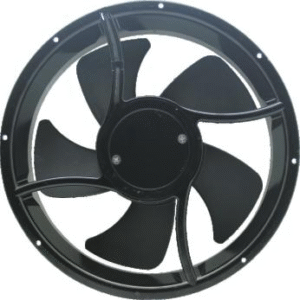
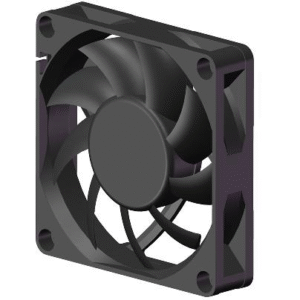
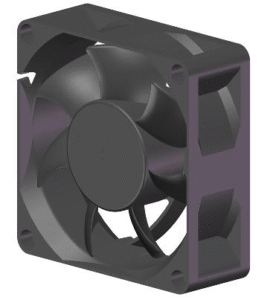
Cooling fans help remove heat by increasing airflow across heat-generating components.
Compared with passive cooling methods, active cooling using axial fans provides higher heat dissipation efficiency.
Cooling fans are commonly used in:
-
industrial control cabinets
-
telecom cabinets
-
power electronics systems
-
inverter systems
-
automation equipment
-
communication devices
In these applications, DC axial fans and AC axial fans are often selected because they provide reliable airflow and compact installation.
Key Factors When Selecting a Cooling Fan
When engineers select a cooling fan for industrial electronics, several important parameters must be considered.
Airflow Performance
Adequate airflow ensures effective heat removal from electronic components. Engineers often calculate the required airflow based on the thermal load of the system.
Static Pressure
In systems with airflow resistance, such as control cabinets or telecom enclosures, fans must provide sufficient static pressure to maintain airflow.
Reliability and Lifespan
For industrial equipment operating continuously, reliability is critical. Many industrial cooling fan manufacturers recommend dual ball bearing fans because they offer longer service life.
Noise Level
Although industrial environments are less sensitive to noise, some applications such as medical equipment or office electronics require lower noise levels.
Typical Applications of Industrial Cooling Fans
Industrial cooling fans are used in a wide range of electronic equipment.
Examples include:
-
telecom base station cabinets
-
industrial automation controllers
-
solar inverter systems
-
power supply units
-
communication network equipment
-
data processing systems
In these applications, high-reliability axial fans help maintain stable system operation.
Choosing the Right Cooling Fan Supplier
Selecting a reliable cooling fan manufacturer or supplier is also important for long-term system stability.
A professional supplier can provide:
-
customized airflow solutions
-
long-life industrial fans
-
OEM cooling fan services
-
engineering support for thermal design
Working with an experienced supplier helps equipment manufacturers improve system reliability and performance.
Conclusion
Thermal management is a critical aspect of modern electronic system design. Without proper cooling solutions, electronic equipment may experience reduced reliability and shorter operational life.
Cooling fans remain one of the most efficient and cost-effective solutions for industrial electronics cooling. By selecting the right industrial cooling fan and supplier, equipment manufacturers can significantly improve system performance and long-term stability.