4028A vs 4028B vs 4028C: Comparing Three SenharFans DC Axial Fans
Choosing the right DC axial fan involves more than comparing dimensions and maximum airflow. Material selection, static pressure, power consumption, noise, control functions, and environmental requirements all influence the final decision.
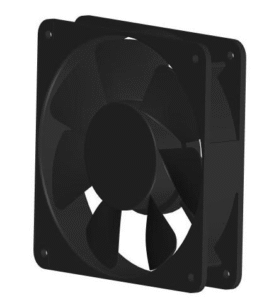
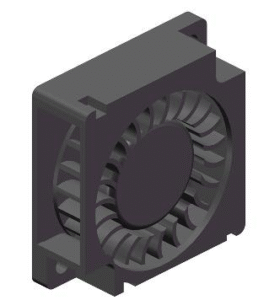
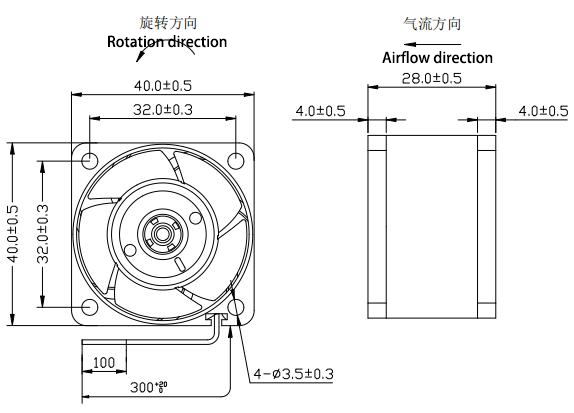
The SenharFans 4028A, 4028B, and 4028C DC axial fans share the same nominal dimensions of 40.0 × 40.0 × 28.0 mm, but differ in structural materials and performance characteristics.
This comparison highlights the key differences between the three models to help OEM buyers, equipment manufacturers, and engineers identify a suitable cooling solution for their applications.
1. Structural and Material Comparison
One of the main differences between the three models is their frame and impeller material.
| Model | Frame Material | Impeller Material | Bearing Type | Weight |
|---|---|---|---|---|
| 4028A | Engineering plastic | Engineering plastic | Dual ball bearings | 48.0 g |
| 4028B | Aerospace plastic | Aerospace plastic | Dual ball bearings | 54.0 g |
| 4028C | Aluminum alloy | Aluminum alloy | Dual ball bearings | 62.0 g |
4028A: Engineering Plastic Construction
The 4028A uses engineering plastic for both its frame and impeller. At approximately 48 g, it is the lightest of the three models.
This configuration may be considered where low product weight and a conventional plastic fan structure are important design considerations.
4028B: Aerospace Plastic Construction
The 4028B uses aerospace plastic for its frame and impeller. It offers a different material configuration from the engineering-plastic 4028A and the aluminum-alloy 4028C.
Its available environmental adaptability configurations also include options for ground/vehicle-mounted, marine/naval, and airborne applications, subject to the selected rating.
4028C: Aluminum Alloy Construction
The 4028C features an aluminum alloy frame and impeller. With a listed weight of approximately 62 g, it is the heaviest of the three models.
Its metal construction provides an alternative for equipment designers who specifically require an aluminum-alloy fan structure.
Material selection should be based on mechanical integration, weight limitations, environmental conditions, and project requirements. Material type alone does not establish a fan’s environmental qualification or service life.
2. Performance Specifications Comparison
All three models have a nominal size of 40 × 40 × 28 mm and offer 12 V, 24 V, and 28 V configurations.
However, their available speed and performance ranges differ.
| Parameter | 4028A | 4028B | 4028C |
|---|---|---|---|
| Dimensions | 40 × 40 × 28 mm | 40 × 40 × 28 mm | 40 × 40 × 28 mm |
| Voltage options | 12 / 24 / 28 V | 12 / 24 / 28 V | 12 / 24 / 28 V |
| Speed range | 11,000–18,000 RPM | 13,000–25,000 RPM | 13,000–25,000 RPM |
| Airflow range | 25.9–42.5 m³/h | 26.8–47.5 m³/h | 24.4–46.9 m³/h |
| Static pressure range | 156–313 Pa | 236.5–750 Pa | 188.5–697 Pa |
| Noise range | 46.3–57.1 dBA | 49.5–63.7 dBA | 48.9–63.1 dBA |
| Weight | 48.0 g | 54.0 g | 62.0 g |
Note: The ranges represent the available configurations listed on the respective product pages. They are not necessarily performance values at the same operating point.
Understanding the Performance Differences
4028A: A lower-speed option
The 4028A offers three speed configurations: 11,000, 15,000, and 18,000 RPM. Its maximum listed airflow is 42.5 m³/h, with maximum listed static pressure of 313 Pa.
It may be considered for applications that require less demanding airflow and pressure levels than the higher-speed configurations of the other two models.
4028B: The highest listed static pressure
The 4028B reaches a maximum listed airflow of 47.5 m³/h and static pressure of 750 Pa at 25,000 RPM.
Among these three models, it has the highest listed airflow and static pressure. It may be worth evaluating for systems with demanding airflow requirements and relatively high resistance.
4028C: Aluminum alloy with high-speed options
The 4028C reaches a maximum listed airflow of 46.9 m³/h and static pressure of 697 Pa at 25,000 RPM.
Its performance range is close to that of the 4028B, while its aluminum alloy frame and impeller provide a distinct structural option.
What About Noise and Power?
Higher-speed configurations generally involve higher power consumption and noise.
For example, the 25,000 RPM versions are listed at:
- 4028B: 13.3 W and 63.7 dBA
- 4028C: 11.2 W and 63.1 dBA
The 4028A’s highest-speed version is rated at 8.6 W and 57.1 dBA at 18,000 RPM.
Therefore, the model with the highest airflow or static pressure is not automatically the best choice for every project. Engineers should consider the cooling target, power budget, and acoustic requirements together.
3. Environmental Adaptability and Qualification Options
For equipment used in demanding environments, environmental qualification is an important part of fan selection.
The SenharFans product specifications list environmental adaptability ratings for different application categories.
| Environmental Application Category | 4028A | 4028B | 4028C |
|---|---|---|---|
| Ground / Vehicle-Mounted | Listed | Listed | Listed |
| Marine / Naval | Listed | Listed | Listed |
| Airborne | Not listed in current table | Listed | Listed |
The product pages reference environmental test methods and requirements including:
- High-temperature testing
- Low-temperature testing
- Rain and water ingress
- Damp heat and humidity
- Fungus resistance
- Salt spray
- Sand and dust
- Acceleration and mechanical shock
- Vibration
- Electromagnetic compatibility (EMC)
- Power supply characteristics
The listed standards include relevant methods from the GJB 150 series, GJB 151B-2013, and GJB 181B-2012.
Important: Environmental adaptability depends on the selected model configuration and rating code. The presence of a test category in a product specification does not mean every version has passed every test. Buyers should confirm the exact environmental rating, applicable test records, and qualification documents for the selected configuration.
4. Signal and Control Functions
The three product series offer similar signal and control options.
Depending on the selected configuration, available functions include:
- No signal function: For applications that do not require monitoring or external speed control.
- PWM speed control: Allows fan speed adjustment through a compatible PWM control signal.
- High-level fault alarm: Provides a fault indication through the specified alarm interface.
- Tachometer (FG) feedback: Provides rotational-speed information for monitoring.
- PWM + fault alarm: Combines speed control and fault monitoring.
- PWM + RPM feedback: Combines speed control with rotational-speed feedback.
These options allow equipment manufacturers to select a suitable level of fan control and monitoring according to their system design.
Signal availability, electrical specifications, and connector pinout should be confirmed for the exact model.
5. Which Model Is Suitable for Your Application?
The most suitable model depends on the priorities of the equipment design.
Consider the 4028A if:
- A lighter fan structure is preferred.
- Engineering plastic construction meets the mechanical requirements.
- The required cooling performance falls within its listed airflow and pressure range.
- The project requires ground/vehicle-mounted or marine/naval environmental configurations.
Consider the 4028B if:
- Higher airflow or static pressure is required.
- Aerospace plastic construction is preferred.
- The project requires evaluation of ground/vehicle-mounted, marine/naval, or airborne environmental configurations.
- The system can accommodate the power consumption and noise of the selected high-speed version.
Consider the 4028C if:
- An aluminum alloy frame and impeller are required.
- High-speed cooling performance is needed.
- The project requires evaluation of metal fan construction.
- The application calls for a ground/vehicle-mounted, marine/naval, or airborne environmental configuration.
These are selection considerations rather than fixed application limitations. Final suitability should always be determined by the actual technical requirements and qualification needs of the equipment.
6. How to Choose the Right 4028 Series Fan
Before requesting a quotation, OEM buyers and equipment manufacturers should prepare the following information:
- Operating voltage: 12 V, 24 V, or 28 V.
- Required airflow: The airflow needed to remove heat from the equipment.
- Static pressure: The pressure requirement at the actual system operating point.
- Installation conditions: Available space, mounting arrangement, and airflow direction.
- Material preference: Engineering plastic, aerospace plastic, or aluminum alloy.
- Noise and power limits: The maximum acceptable noise level and available power budget.
- Control functions: PWM, tachometer feedback, fault alarm, or no signal.
- Environmental requirements: Ground/vehicle-mounted, marine/naval, or airborne qualification needs.
- Quantity and project schedule: Estimated order quantity and expected delivery requirements.
The fan’s P-Q performance curve should be reviewed together with the system resistance to determine whether the selected model can deliver the required airflow in the finished equipment.
Conclusion: Comparing 4028A, 4028B, and 4028C
The three SenharFans 4028 series DC axial fans share the same nominal dimensions but offer different structural materials and performance characteristics.
- 4028A: Engineering plastic construction, the lightest weight, and a lower maximum speed range.
- 4028B: Aerospace plastic construction and the highest listed airflow and static pressure.
- 4028C: Aluminum alloy construction with high-speed performance close to the 4028B.
There is no single best model for every application. The right choice depends on the balance between airflow, static pressure, weight, material requirements, noise, power consumption, and environmental qualification.
Need help comparing the 4028A, 4028B, and 4028C for your project?
Contact SenharFans to discuss your technical requirements and request detailed product specifications, performance curves, and available environmental qualification documentation.
Email: sales@senharfans.com
Website: https://senharfans.com/