AC Axial Fans for Industrial Control Cabinets: Practical Cooling and Ventilation Considerations
Industrial control cabinets house electrical and electronic components that generate heat during operation. Variable frequency drives, power supplies, controllers, relays, and communication devices all contribute to the thermal load inside an enclosure.
Without adequate ventilation or heat dissipation, internal temperatures may rise beyond the recommended operating limits of individual components. This can affect equipment performance, increase maintenance requirements, and shorten component service life.
AC axial fans provide a practical ventilation option for industrial control cabinets where forced-air cooling is required. By moving air through the enclosure, they help remove accumulated heat and support more consistent operating conditions.
Why Control Cabinets Need Proper Airflow
Heat accumulation is a common consideration in enclosed electrical systems. The actual thermal load depends on the installed components, their power consumption, operating cycles, and the cabinet’s surrounding environment.
Several factors can contribute to elevated internal temperatures:
- Power conversion equipment: Drives, inverters, and power supplies generate heat during electrical conversion.
- Limited enclosure space: Compact cabinets may restrict natural air circulation.
- Continuous operation: Equipment running for extended periods can produce a sustained thermal load.
- Installation environment: High ambient temperatures and restricted external airflow can reduce the available cooling margin.
- Dust and contamination: Industrial environments may introduce particles that accumulate on components and ventilation surfaces.
A suitable ventilation arrangement helps move heated air away from components and introduces cooler ambient air when the surrounding conditions permit.
How AC Axial Fans Support Cabinet Ventilation
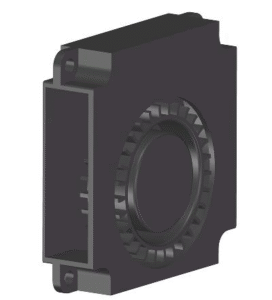
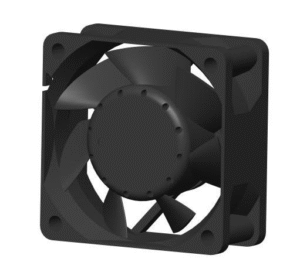
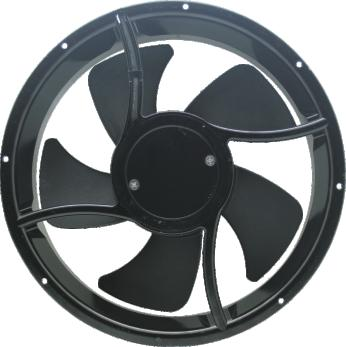
An AC axial fan moves air along the axis of its rotating blades. This airflow arrangement makes axial fans suitable for ventilation openings, enclosure panels, and other installations where air needs to pass through a relatively direct path.
In industrial control cabinets, AC axial fans may be used to:
- Introduce ambient air into the enclosure
- Exhaust heated air from the cabinet
- Improve air circulation around heat-generating components
- Support ventilation in electrical and power distribution enclosures
- Reduce localized heat accumulation when properly positioned
AC-powered models can be considered where the equipment design uses an appropriate AC power supply. The rated voltage and frequency must match the electrical requirements of the installation.
Important Design Considerations When Installing AC Axial Fans
Choosing a fan involves more than checking its rated airflow. The enclosure design and installation conditions also influence the cooling result.
1. Estimate the Heat Load
Start by identifying the major heat-generating components inside the cabinet.
Consider their power losses, operating conditions, and manufacturer-recommended temperature limits. The required cooling capacity should be evaluated against the total heat load and the expected ambient temperature.
For systems with substantial heat generation, a thermal calculation or temperature measurement may be necessary before finalizing the ventilation design.
2. Evaluate Airflow Resistance
A fan’s rated airflow is not necessarily the airflow that will be achieved after installation.
Air must pass through openings, grilles, filters, ducts, and internal cabinet spaces. These elements introduce resistance and can reduce the actual airflow.
When evaluating a fan, engineers should consider its airflow performance curve together with the resistance of the complete ventilation path.
3. Plan the Air Intake and Exhaust
A practical ventilation arrangement often uses an intake opening at a lower position and an exhaust opening at a higher position, helping move cooler incoming air through the enclosure while removing warmer air.
However, the best arrangement depends on component layout, cabinet geometry, surrounding clearance, and the location of heat sources.
Avoid placing the intake and exhaust too close together if this could allow incoming air to bypass the main heat-generating components.
4. Consider Filters and Protective Grilles
In dusty industrial environments, an air filter may help reduce the amount of airborne contamination entering the enclosure.
However, filters also increase airflow resistance, particularly as dust accumulates. The selected fan must be evaluated under the expected filter and grille conditions.
A maintenance plan should include periodic inspection and cleaning or replacement of filters where applicable.
5. Check Electrical Compatibility
AC axial fans are available with different rated voltage and frequency specifications.
Before installation, verify:
- Rated AC voltage
- Operating frequency
- Power consumption
- Electrical connection and wiring requirements
- Available installation space
- Applicable electrical safety requirements
For example, a 230V AC, 50Hz fan should only be used in a system designed for a compatible electrical supply. Installation and wiring should be performed by qualified personnel in accordance with applicable safety requirements.
Where AC Axial Fans Are Commonly Used
AC axial fans can support ventilation in a range of industrial electrical applications, including:
Industrial Control Cabinets
Ventilation for cabinets containing controllers, relays, power supplies, and other electrical components.
Variable Frequency Drive and Inverter Enclosures
Air movement around power conversion equipment to help manage heat generated during operation.
Power Distribution Equipment
Ventilation for electrical enclosures where component heat dissipation and cabinet airflow need to be considered.
Communication and Monitoring Equipment
Cooling support for electronic assemblies installed in ventilated cabinets and equipment housings.
Industrial HVAC Electrical Modules
Air circulation within electrical control sections and associated equipment enclosures.
The suitability of a particular fan depends on the actual thermal load, enclosure resistance, environmental conditions, and electrical requirements.
Selecting the Right AC Axial Fan for Your Cabinet
Before choosing an AC axial fan, equipment designers and purchasing teams should review several technical details:
| Selection Factor | What to Check |
|---|---|
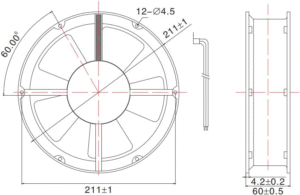
| Fan dimensions | Available mounting space and panel cutout |
| Rated voltage | Compatibility with the system power supply |
| Frequency | Compatibility with the electrical supply |
| Airflow | Required ventilation capacity |
| Static pressure | Ability to overcome system resistance |
| Noise level | Acceptable acoustic performance |
| Bearing type | Specified bearing construction and service-life data |
| Operating temperature | Compatibility with the installation environment |
| Protection requirements | Suitability for dust, moisture, and other environmental conditions |
It is also important to distinguish between a fan’s rated operating data and its performance after installation. Actual cooling results should be assessed under the intended system conditions.
SenharFans AC Axial Fan Solutions
SenharFans develops and supplies AC axial fans for industrial ventilation and equipment cooling applications.
Our AC axial fan range includes compact models for equipment integration, with product specifications covering dimensions, rated voltage, frequency, power consumption, speed, airflow, static pressure, and noise level.
For example, the 6030A and 8025A AC Axial Fans are two models with different dimensions and specified airflow characteristics. Their suitability should be evaluated against the requirements of the target enclosure rather than selected by size alone.
When evaluating a cooling solution, customers can provide the following information:
- Required fan dimensions
- AC rated voltage and frequency
- Target airflow or thermal load
- Available installation space
- Operating temperature
- Environmental and application requirements
Our team can review the application requirements and help identify suitable models for further evaluation.
Contact SenharFans
Email: sales@senharfans.com
Phone / WhatsApp: +86-138-1239-0890
SenharFans – AC Axial Fans for Industrial Ventilation and Equipment Cooling.