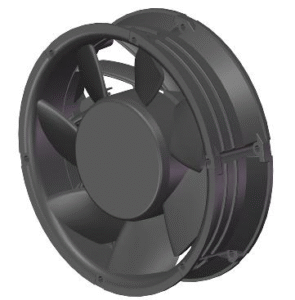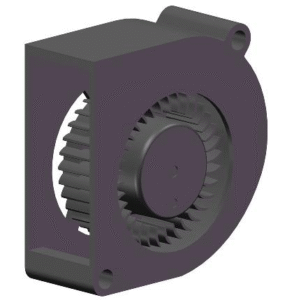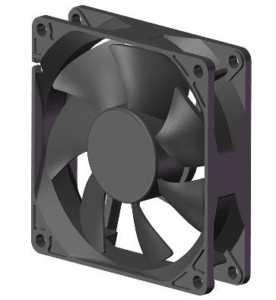
EC Axial Fans: Delivering Energy Savings and Intelligent Cooling for HVAC, Marine and Defense Systems
Why More Engineers Are Switching to EC Fans
As energy costs continue to rise and equipment becomes more compact, thermal management has become increasingly challenging.
Traditional AC cooling fans operate at fixed speed and consume the same amount of power regardless of actual cooling demand. In applications where ambient conditions and heat loads constantly change, this approach wastes energy and limits temperature control.
EC fans (Electronically Commutated Fans) combine the efficiency of brushless DC motors with integrated electronics and intelligent speed control. Compared with conventional AC fans, EC axial fans can significantly reduce power consumption while improving airflow control, acoustic performance, and overall system reliability.
Today, EC fan technology is widely used in HVAC systems, marine ventilation, radar cooling, control cabinet cooling, and airborne electronics cooling where performance and reliability are equally important.
Typical Applications of EC Axial Fans
HVAC Systems
EC fans are commonly used in:
- Air-handling units (AHUs)
- Precision cooling equipment
- Data center HVAC systems
- Variable air volume systems
- Cleanroom air circulation
Variable-speed operation allows airflow to adjust automatically according to thermal demand, improving efficiency and reducing operating costs.
Marine Ventilation
Marine environments require cooling systems capable of operating continuously under humidity, vibration, and fluctuating power conditions.
Typical applications include:
- Engine room ventilation
- Bridge consoles
- Accommodation modules
- Electrical cabinets
- Battery compartments
EC axial fans provide excellent efficiency and stable performance for long-term marine ventilation applications.
Radar Cooling
Modern radar systems generate substantial heat and demand highly reliable airflow.
Applications include:
- Coastal surveillance radar
- Mobile radar shelters
- AESA radar systems
- Communication cabinets
Intelligent speed control enables precise thermal management while reducing unnecessary energy consumption.
Control Cabinet Cooling
High-density industrial cabinets contain:
- Variable frequency drives
- PLC systems
- Power supplies
- Communication modules
EC cooling fans help maintain stable operating temperatures and improve system reliability.
Airborne Electronics Cooling
Aircraft and UAV platforms require:
- Low weight
- High efficiency
- Low noise
- Reliable operation
EC fan technology delivers excellent airflow while minimizing power consumption.
What Makes an EC Fan Different?
High-Efficiency Brushless Motor Technology
Unlike conventional AC motors, EC fans use brushless permanent magnet motors.
Advantages include:
- Higher efficiency
- Lower power consumption
- Reduced heat generation
- Longer service life
Electrical efficiency can reach 80–90%, significantly higher than many traditional AC fan designs.
Integrated Electronics
Built-in control electronics simplify system integration and provide:
- Wide voltage compatibility
- Stable operation
- Improved motor control
- Reduced inventory complexity
Typical input ranges include:
- 90–264 VAC
- 12 VDC
- 24 VDC
- 48 VDC
Intelligent Speed Control
EC fans support multiple control methods, including:
- PWM control
- 0–10 V analog control
- Modbus communication
- CAN Bus interfaces
Variable-speed operation ensures airflow matches actual cooling demand, reducing unnecessary energy usage.
Monitoring and Diagnostics
Integrated functions may include:
- Tachometer outputs
- Locked-rotor alarms
- Temperature monitoring
- Soft-start protection
- Reverse polarity protection
These features support predictive maintenance and help improve system uptime.
Key Benefits of EC Axial Fans
Lower Energy Consumption
Compared with conventional AC fans, EC fans can reduce energy consumption by up to 30%.
Benefits include:
- Lower operating costs
- Reduced generator load
- Improved system efficiency
- Reduced carbon emissions
More Precise Temperature Control
Variable-speed operation allows cooling performance to adapt to changing thermal loads.
Advantages include:
- Improved thermal stability
- Reduced thermal cycling
- Extended component life
- Better overall thermal management
Lower Noise Levels
Optimized motor control and lower operating speeds help reduce noise levels.
This is particularly important for:
- Bridge consoles
- Command centers
- UAV systems
- Medical equipment
- Precision laboratories
Lower Total Cost of Ownership
Although EC fans may have a higher initial purchase cost, they often provide:
- Reduced maintenance
- Longer service life
- Lower spare parts inventory
- Energy savings
Over the life of the equipment, total ownership costs are often significantly lower.
How to Select the Right EC Axial Fan
Before selecting an EC fan, engineers should evaluate:
Airflow Requirements
- Required airflow (CFM or m³/h)
- Static pressure requirements
- System resistance
Environmental Conditions
- Operating temperature
- Humidity
- Salt spray exposure
- Vibration levels
Input Power
Available supply voltages:
- 12 VDC
- 24 VDC
- 48 VDC
- 115 VAC
- 230 VAC
Control Requirements
Consider whether the application requires:
- PWM control
- Analog control
- Digital communication
- Alarm outputs
- Speed monitoring
Reliability Requirements
Evaluate:
- Bearing type
- Protection level
- Compliance requirements
- Expected service life
Application Example: Pharmaceutical HVAC Retrofit
Challenge
A pharmaceutical manufacturer needed to reduce energy consumption while maintaining strict temperature uniformity requirements.
Existing fixed-speed AC ventilation fans consumed excessive energy and generated unnecessary noise.
Solution
SenharFans supplied EC axial fans with integrated speed control connected to temperature sensors.
Results
The new system achieved:
- Lower energy consumption
- Reduced noise levels
- Improved temperature stability
- Lower maintenance requirements
Customer details withheld under NDA.
Why OEMs Choose SenharFans
Flexible OEM Cooling Solutions
Customized options include:
- Multiple frame sizes
- AC and DC input versions
- IP protection upgrades
- Special connectors
- Customized control functions
Harsh Environment Expertise
SenharFans supports applications involving:
- Marine ventilation
- Radar cooling
- Control cabinet cooling
- HVAC systems
- Airborne electronics cooling
Optional features include:
- IP68 protection
- Nano-coating
- High-temperature windings
- Long-life bearings
Reliable Manufacturing
Strict quality control and automated production ensure consistent product performance.
Complete Thermal Management Support
Beyond cooling fans, SenharFans provides:
- Airflow analysis
- Thermal simulations
- Product customization
- Qualification testing
- Long-term engineering support
Conclusion
EC axial fans are redefining modern cooling systems.
Their combination of high efficiency, intelligent speed control, low noise, and long service life makes them an ideal choice for HVAC systems, marine ventilation, radar cooling, control cabinet cooling, and airborne electronics applications.
As energy efficiency and reliability become increasingly important, EC fan technology offers a practical path toward building a high reliability cooling system and reducing long-term operating costs.
Contact SenharFans
Looking for a customized OEM cooling solution?
Email: sales@senharfans.com
Website: www.senharfans.com
Phone / WhatsApp: +86 138 1239 0890
SenharFans – High-Efficiency EC Fans and Thermal Management Solutions for Demanding Applications.