How to Choose an Axial Fan for Industrial Equipment: 7 Factors Beyond Airflow
When selecting an axial fan for industrial equipment, many buyers start with one simple question:
How much airflow do I need?
Airflow is important, but it is only one part of the selection process.
In real industrial applications, a cooling fan operates inside a system—not in free air. Filters, grilles, heat sinks, narrow air channels, temperature conditions, installation direction, vibration, humidity, and operating hours can all affect actual performance.
A fan that looks suitable based on its CFM rating may perform poorly after installation.
For OEM manufacturers, industrial system integrators, equipment designers, and distributors, choosing the right axial fan requires a broader understanding of the operating environment.
This article explains seven important factors to consider when selecting an axial fan, cooling fan, or ventilation fan for industrial equipment.
1. Airflow Is Only the Starting Point
Airflow is usually expressed in CFM or m³/h.
However, the published airflow value is often measured under free-air conditions. Once the fan is installed inside a cabinet, enclosure, HVAC system, radar equipment, or other electronic system, airflow resistance increases.
Common sources of resistance include:
- Air filters
- Protective grilles
- Heat sinks
- Narrow air channels
- Electronic components
- Cable bundles
- Louvers
- Dust accumulation
As system resistance increases, actual airflow decreases.
For this reason, engineers should not select an industrial cooling fan based only on maximum free-air airflow.
The more useful question is:
How much airflow can the fan deliver at the actual operating pressure of the system?
This is where the fan’s P-Q curve, also known as the airflow-pressure curve, becomes important.
A suitable axial fan should provide enough airflow at the required static pressure—not simply advertise a high CFM number.
For applications involving control cabinet cooling, HVAC cooling, radar cooling, marine ventilation, or industrial cooling, static pressure can be just as important as airflow.
2. Understand the System’s Static Pressure
Static pressure represents the resistance that the fan must overcome to move air through a system.
For example, a fan installed behind a clean filter may perform well initially. After several months of operation, the filter may collect dust and resistance may increase significantly.
If the fan has insufficient pressure capability, airflow can drop below the level required to remove heat effectively.
This is especially important in applications such as:
- Outdoor electrical cabinets
- Telecom equipment
- Industrial control cabinets
- Radar systems
- Marine electronics
- HVAC systems
- Equipment with dense heat sinks
When selecting a cooling fan, it is advisable to consider both the normal system resistance and the expected resistance after filters or air paths become partially restricted.
A reasonable performance margin can help maintain reliable cooling over the operating life of the equipment.
This approach is particularly valuable for mission-critical cooling, where an unexpected reduction in airflow may affect system availability.
3. Consider the Actual Operating Temperature
A cooling fan may perform differently at high ambient temperatures than it does under standard laboratory conditions.
Industrial equipment can operate in environments ranging from cold outdoor installations to high-temperature equipment compartments.
The operating temperature can affect:
- Motor performance
- Electronic components
- Bearing lubrication
- Material stability
- Fan lifetime
For example, an industrial cooling system operating continuously in a cabinet with an ambient temperature of 70°C places much greater stress on the fan than an office ventilation application operating at room temperature.
When comparing fans, buyers should check:
- Operating temperature range
- Continuous operating temperature
- Start-up temperature requirements
- Bearing type
- Expected lifetime at elevated temperatures
For equipment designed for harsh environments, the highest expected temperature should be considered during the selection process.
This is particularly relevant for industrial cooling, airborne electronics cooling, marine equipment, and radar cooling.
4. Environmental Conditions Matter More Than Many Buyers Expect
Temperature is only one environmental factor.
Depending on the application, an axial fan may also be exposed to:
- Dust
- Humidity
- Salt spray
- Condensation
- Vibration
- Shock
- Oil mist
- Corrosive gases
A standard commercial cooling fan may be perfectly suitable for a clean indoor cabinet but may not provide the same long-term reliability in a coastal, offshore, transportation, or defense application.
Environmental protection may involve different design elements, including:
- Higher IP protection levels
- Conformal coating for electronic components
- Potting or sealing processes
- Corrosion-resistant materials
- Special bearing arrangements
- Protective coatings
- Reinforced mechanical structures
The appropriate solution depends on the actual operating environment.
For example, marine ventilation systems may require additional attention to corrosion and humidity, while mobile equipment may require better vibration resistance.
The goal should not simply be to choose the highest specification available.
Instead, the fan design should match the real environmental requirements of the equipment.
5. Noise and Speed Control Should Be Considered Together
In many industrial applications, maximum fan speed is not required continuously.
A fan operating at full speed all the time may consume more energy, generate unnecessary noise, and place additional stress on mechanical components.
Speed control can allow the cooling system to adjust airflow according to actual thermal demand.
Depending on the application, common control methods may include:
- PWM speed control
- Voltage control
- Analog control signals
- Temperature-based speed control
For example, an industrial cabinet may require maximum airflow during periods of high internal temperature but significantly less cooling during lower-load conditions.
Variable-speed operation can help balance:
- Cooling performance
- Noise
- Energy consumption
- Fan operating life
For OEM equipment manufacturers, integrating fan speed control into the overall thermal management solution can provide more flexibility than using a fixed-speed fan in every operating condition.
6. Reliability Depends on More Than the Motor
When evaluating a high reliability cooling system, buyers often focus on motor specifications.
The motor is important, but long-term reliability depends on the complete fan design.
Important factors include:
Bearing System
The bearing design has a direct impact on expected operating life, especially under high temperature or continuous operation.
Electronics
For brushless DC fans, the driver electronics should be designed to operate reliably under the expected voltage and temperature conditions.
Protection against electrical abnormalities may also be important depending on the equipment.
Mechanical Design
The fan frame, impeller, and mounting structure should be appropriate for the expected vibration and operating conditions.
Material Selection
Different materials may be required depending on temperature, corrosion exposure, mechanical strength, and application requirements.
Manufacturing Consistency
Even a good design can produce inconsistent results without stable manufacturing and quality control.
For OEM customers, reliability should therefore be evaluated as a complete system rather than through a single performance number.
7. Customization Can Be More Important Than Choosing a Standard Fan
Standard products are suitable for many applications.
However, industrial equipment often has specific requirements involving:
- Dimensions
- Mounting interfaces
- Voltage
- Airflow
- Static pressure
- Speed
- Noise
- Cable length
- Connector type
- Environmental protection
- Monitoring signals
In these situations, working with an experienced OEM fan supplier can simplify equipment development.
At SenharFans, we support customers with customized fan solutions based on actual application requirements.
Depending on the project, customization may include adjustments to:
- Mechanical dimensions
- Electrical interfaces
- Speed control
- Airflow performance
- Environmental protection
- Connectors and cable assemblies
- Monitoring functions
For many equipment manufacturers, the goal is not simply to purchase a fan.
The goal is to develop an OEM cooling solution that fits the equipment, operating environment, and long-term maintenance requirements.
Choosing the Right Fan for Different Applications
Different industries place different demands on an industrial airflow solution.
HVAC Systems
HVAC cooling applications often require a balance between airflow, energy efficiency, noise, and continuous operating life.
System resistance and installation space should be carefully evaluated.
Control Cabinet Cooling
Control cabinet cooling often involves filters, restricted airflow paths, and high component density.
Static pressure and long-term reliability are important selection factors.
Radar Cooling
Radar systems may generate significant heat in relatively compact electronic enclosures.
The cooling system may need to operate reliably for long periods and maintain stable performance under demanding environmental conditions.
Marine Ventilation
Marine and offshore equipment may be exposed to humidity, salt-containing air, vibration, and temperature changes.
Corrosion resistance and environmental protection can therefore become important parts of fan selection.
Airborne Electronics Cooling
Airborne equipment may involve vibration, temperature variation, limited installation space, and strict reliability requirements.
Weight, mechanical design, and environmental performance should all be considered.
Industrial Equipment
Industrial cooling requirements vary widely.
A fan suitable for a clean factory environment may not be appropriate for outdoor equipment, transportation systems, or high-temperature installations.
Understanding the real operating conditions is the first step toward selecting the right solution.
Why Work with SenharFans?
SenharFans is a thermal management brand focused on industrial and demanding electronic cooling applications.
Our product range includes:
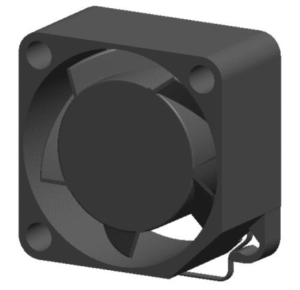
- DC axial fans
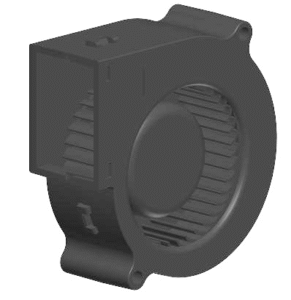
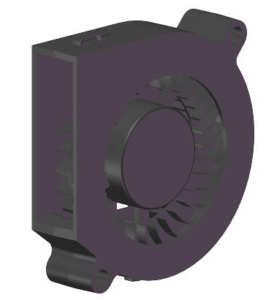
- DC blower fans
- DC condensing fans
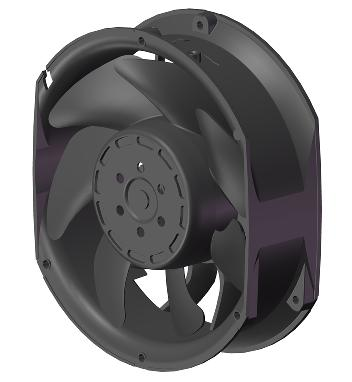
- AC axial fans
We support applications including:
- HVAC systems
- Industrial cooling
- Control cabinet cooling
- Radar cooling
- Marine ventilation
- Airborne electronics cooling
- Naval systems cooling
Our engineering and manufacturing capabilities allow us to support customers who require more than a standard catalogue product.
We focus on three practical areas:
Application-Oriented Selection
We work from the actual operating conditions, including airflow requirements, pressure resistance, temperature, installation space, and environmental factors.
Flexible OEM/ODM Support
For customers with specific equipment requirements, we can support customized solutions involving electrical, mechanical, and performance parameters.
Quality and Reliability
Our company has established a GJB 9001C-2017 quality management system and maintains production and testing capabilities for demanding electronic equipment applications.
Our goal is straightforward:
To provide a reliable thermal management solution that matches the actual operating requirements of the equipment.
Final Thoughts: Choose the Fan for the System, Not Just the Datasheet
Selecting an axial fan based only on maximum airflow can create problems later in the product development process.
A more reliable approach is to evaluate the complete application:
- Required airflow
- Static pressure
- Operating temperature
- Environmental conditions
- Noise requirements
- Speed control
- Long-term reliability
- Customization requirements
By considering these factors early, OEM manufacturers and system integrators can reduce redesign work and improve the long-term performance of their equipment.
For demanding applications, the cooling fan should be treated as part of the overall thermal management solution, not simply as an individual component.
Looking for a Reliable Axial Fan or OEM Cooling Solution?
If you are developing industrial equipment, HVAC systems, control cabinets, radar equipment, marine electronics, or other systems requiring reliable airflow and cooling, SenharFans can help evaluate your application requirements.
Whether you need a standard axial fan, cooling fan, ventilation fan, or a customized industrial airflow solution, our team can support your project with application-focused recommendations.
Send us your requirements, drawings, or existing fan specifications for evaluation.
📧 Email: sales@senharfans.com
🌐 Website: senharfans.com
SenharFans — Reliable Thermal Management for Demanding Applications.