Industrial Thermal Management: A Complete Guide to Selecting the Right Cooling Solution for Your Application
The Hidden Costs of Poor Thermal Management Decisions
Every year, industrial facilities worldwide lose millions of dollars due to equipment failures caused by inadequate thermal management. A recent study by the Industrial Maintenance Institute found that overheating-related failures account for 42% of unplanned downtime in manufacturing environments, with average repair costs exceeding $50,000 per incident.
The problem isn’t just equipment failure—it’s making the wrong cooling decisions from the start. Many engineers and procurement teams focus primarily on initial cost and basic airflow specifications, overlooking critical factors that determine long-term reliability and total cost of ownership. This approach leads to frequent replacements, unexpected downtime, and compromised system performance.
Industrial thermal management isn’t just about moving air; it’s about creating reliable, efficient cooling systems that maintain optimal operating conditions across varying environmental challenges. Whether you’re designing HVAC systems for commercial buildings, cooling control cabinets in harsh industrial environments, or managing heat in marine electronics, the right thermal management solution can mean the difference between years of reliable operation and costly recurring failures.
Understanding Industrial Cooling Requirements
Control Cabinet Cooling: Managing Heat in Confined Spaces
Control cabinet cooling presents unique challenges that distinguish it from general ventilation applications. Modern industrial control systems pack increasing amounts of electronic components into smaller enclosures, creating concentrated heat loads that can quickly exceed safe operating temperatures.
Traditional approaches often rely on basic ventilation fans that simply exhaust hot air without considering air circulation patterns, filtration requirements, or environmental protection. This leads to hot spots, dust accumulation, and premature component failure.
Effective control cabinet thermal management requires:
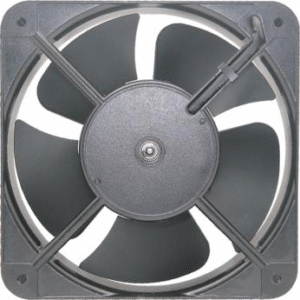
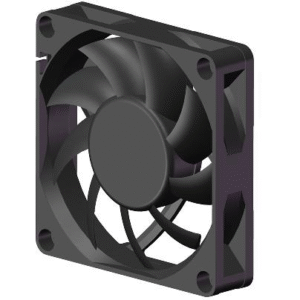
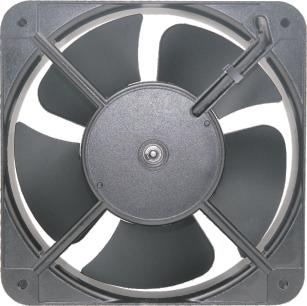
Proper Air Circulation: Axial fans positioned to create efficient airflow patterns that eliminate hot spots while maintaining positive pressure to prevent dust ingress. Our high-performance axial fans are specifically designed for cabinet applications, providing up to 15% better air circulation efficiency compared to standard industrial fans.
Environmental Protection: Many industrial environments expose control cabinets to dust, moisture, chemicals, and temperature extremes. IP-rated cooling fans with protective coatings ensure reliable operation in these challenging conditions.
Noise Considerations: In occupied industrial spaces, low-noise cooling solutions are essential. Our EC fan technology reduces operational noise by up to 40% while maintaining superior cooling performance.
HVAC Systems: Balancing Efficiency and Performance
Modern HVAC cooling demands have evolved far beyond simple air movement. Building operators and facility managers increasingly require systems that deliver precise climate control while minimizing energy consumption and maintenance requirements.
Variable Speed Control: Traditional AC fans operate at fixed speeds regardless of actual cooling demand, wasting energy and creating unnecessary noise. EC fans with integrated speed control adjust automatically to maintain optimal temperatures while reducing energy consumption by up to 35%.
Smart Integration: Today’s HVAC systems require cooling components that integrate seamlessly with building management systems. Our intelligent cooling fans provide real-time performance monitoring, predictive maintenance alerts, and remote control capabilities that optimize system performance while reducing operational costs.
Longevity in Commercial Applications: HVAC ventilation systems in commercial buildings operate continuously for years. Standard commercial fans typically require replacement every 2-3 years, while our high-reliability cooling systems deliver consistent performance for 5+ years with minimal maintenance.
Marine and Offshore: Cooling in Hostile Environments
Marine ventilation and offshore cooling applications represent some of the most demanding environments for thermal management equipment. Salt spray corrosion, constant vibration, extreme temperature variations, and the need for absolute reliability create requirements that standard industrial fans simply cannot meet.
Corrosion Resistance: Our marine-grade cooling fans feature advanced Parylene conformal coating that provides molecular-level protection against salt spray and chemical corrosion. Independent testing shows over 300% improvement in operational life compared to standard marine fans.
Vibration Tolerance: Offshore platforms and marine vessels subject cooling equipment to constant vibration and shock loads. Our maritime cooling solutions incorporate precision bearing systems and reinforced housings tested to 20G operational vibration—far exceeding standard industrial specifications.
Power Efficiency: Remote marine installations often have limited power generation capacity. Our energy-efficient cooling systems reduce power consumption while maintaining superior cooling performance, critical for battery-powered and generator-dependent applications.
Advanced Cooling Technologies for Industrial Applications
EC Fan Technology: The Future of Industrial Cooling
Electronically Commutated (EC) fan technology represents the next generation of industrial cooling solutions, combining the efficiency of DC motors with the convenience of AC power systems. This technology delivers significant advantages over traditional AC cooling fans:
Energy Efficiency: EC fans achieve up to 50% energy savings compared to traditional AC fans through precise speed control and optimized motor efficiency. In continuous-operation applications, this translates to substantial operational cost reductions.
Precise Control: Unlike fixed-speed AC fans, EC fan systems provide infinitely variable speed control, allowing precise adjustment to match actual cooling requirements. This capability is essential for applications with varying heat loads or noise-sensitive environments.
Reliability: EC motors have fewer wearing parts than traditional AC motors, resulting in significantly longer operational life and reduced maintenance requirements. Independent testing shows EC fans typically achieve 2-3 times the operational life of comparable AC units.
Smart Capabilities: Modern EC cooling fans integrate sensors and communication capabilities that enable predictive maintenance, remote monitoring, and automated performance optimization—features impossible with traditional fan technology.
High-Temperature Cooling Solutions
Many industrial applications require cooling systems capable of reliable operation in extreme temperature environments. Standard commercial fans typically fail when ambient temperatures exceed 70°C, but industrial processes often generate much higher temperatures.
Our high-temperature cooling fans operate reliably in ambient temperatures up to 125°C through advanced materials engineering and specialized motor designs. Key features include:
Advanced Bearing Systems: High-temperature applications require bearing systems that maintain lubrication and dimensional stability under extreme conditions. We use specialized high-temperature bearings that deliver consistent performance throughout the entire temperature range.
Materials Engineering: Standard fan housings and impellers degrade rapidly at high temperatures. Our high-temperature cooling solutions use specially formulated polymers and metal alloys that maintain structural integrity and performance characteristics even under continuous high-temperature operation.
Thermal Protection: Built-in thermal monitoring prevents damage from temperature excursions while providing early warning of cooling system issues that could compromise process equipment.
Explosion-Proof and Hazardous Location Cooling
Industrial facilities processing flammable materials or operating in explosive atmospheres require specialized cooling solutions that meet stringent safety standards without compromising performance.
Certified Safety: Our explosion-proof cooling fans meet ATEX and NEC standards for hazardous location applications, providing necessary cooling while maintaining safety compliance in chemical processing, oil and gas, and pharmaceutical facilities.
Spark-Free Design: Specialized motor designs eliminate potential ignition sources while delivering reliable cooling performance in environments where even minor electrical faults could trigger catastrophic events.
Easy Maintenance: Hazardous location equipment must balance safety with practical maintenance requirements. Our hazard-rated cooling systems feature accessible service points and modular designs that minimize maintenance exposure while ensuring ongoing reliability.
Application-Specific Cooling Solutions
Radar and Defense Electronics Cooling
Radar cooling systems operate under some of the most demanding conditions in industrial applications. These systems must provide reliable cooling for sensitive electronics while withstanding extreme environmental conditions and maintaining electromagnetic compatibility.
EMC Compliance: Radar systems require cooling solutions that don’t interfere with sensitive electronic equipment. Our military-grade cooling fans meet stringent electromagnetic compatibility standards while delivering superior cooling performance.
Environmental Extremes: Military and defense applications often operate in environments ranging from arctic conditions to desert heat. Our defense cooling solutions operate reliably from -40°C to +85°C while maintaining consistent performance throughout this extreme range.
Reliability Requirements: Defense applications cannot tolerate cooling failures. Our mission-critical cooling systems achieve Mean Time Between Failures (MTBF) exceeding 50,000 hours in typical military applications—over 3 times the reliability of commercial alternatives.
Airborne Electronics Cooling
Airborne electronics present unique cooling challenges that combine weight restrictions, power limitations, and extreme operating conditions. Aviation cooling systems must deliver maximum performance while meeting stringent weight and size constraints.
Lightweight Design: Every gram matters in aviation applications. Our lightweight cooling fans achieve 30% weight reduction compared to standard alternatives while maintaining superior airflow performance through advanced materials and precision manufacturing.
Altitude Performance: Aviation cooling systems must operate effectively at varying altitudes where air density changes significantly affect fan performance. Our altitude-compensated designs maintain consistent cooling performance from sea level to maximum operating altitude.
Vibration Resistance: Aircraft environments subject cooling equipment to constant vibration and occasional shock loads. Our aviation-grade cooling solutions incorporate specialized bearing systems and mounting designs that maintain reliable operation in high-vibration environments.
Data Center and IT Cooling
Modern data centers require cooling solutions that balance performance, energy efficiency, and reliability to support critical IT infrastructure. Traditional cooling approaches often prove inadequate for today’s high-density server environments.
Precision Cooling: Data center equipment requires precise temperature control to maintain optimal performance and prevent costly downtime. Our precision cooling fans provide accurate temperature control while minimizing energy consumption.
Hot Aisle/Cold Aisle Optimization: Effective data center cooling requires strategic airflow management. Our directional cooling solutions optimize air circulation patterns to eliminate hot spots and improve overall cooling efficiency.
Redundancy and Reliability: IT cooling systems require built-in redundancy to prevent single points of failure that could compromise critical systems. Our redundant cooling architectures provide backup cooling capacity while maintaining energy efficiency during normal operation.
Selecting the Right Cooling Partner
Engineering Expertise and Application Support
Industrial cooling applications require more than product supply—they demand engineering expertise and ongoing support throughout the product lifecycle. When evaluating cooling fan suppliers, consider these critical capabilities:
Application Engineering: Does the supplier provide detailed application analysis, including thermal modeling, airflow optimization, and environmental compatibility assessment? Our engineering team works directly with customers to develop customized cooling solutions that address specific application requirements.
Prototype Development: Complex applications often require custom solutions that can’t be addressed with standard products. We provide rapid prototyping services that enable thorough testing and validation before committing to production quantities.
Field Support: Ongoing technical support is essential for optimizing cooling system performance and addressing operational issues. Our field service team provides on-site consultation, performance optimization, and troubleshooting support throughout the product lifecycle.
Manufacturing Quality and Certification
Mission-critical cooling applications require suppliers with proven manufacturing quality and relevant certifications:
Quality Systems: Our manufacturing processes are certified to GJB 9001C-2017 (Chinese military standard), ensuring consistent quality that meets the most demanding applications.
Testing and Validation: Every cooling fan undergoes comprehensive testing including thermal cycling, vibration testing, EMC compliance verification, and long-term reliability validation before shipping.
Traceability: Critical applications require complete component traceability. Our quality systems provide detailed documentation of materials, processes, and testing results for every product.
Supply Chain Reliability and Scalability
Industrial OEMs require suppliers capable of scaling from prototype quantities to high-volume production while maintaining consistent quality and delivery performance:
Production Capacity: Our established production lines can scale from small prototype quantities to production volumes exceeding 10,000 units per month while maintaining stringent quality standards.
Supply Chain Management: We maintain strategic inventory levels and diversified supplier relationships to ensure consistent component availability and predictable delivery schedules.
Global Support: International OEMs require suppliers capable of providing local support in multiple regions. Our global partnership network provides technical support and service capabilities worldwide.
Total Cost of Ownership: Making Smart Investment Decisions
Beyond Initial Purchase Price
Many procurement decisions focus primarily on initial purchase price, overlooking factors that determine total cost of ownership over the product lifecycle:
Energy Consumption: High-efficiency cooling fans may have higher initial costs but deliver substantial operational savings. A typical industrial facility can save $2,000-5,000 annually in energy costs by upgrading to EC fan technology.
Maintenance Requirements: Standard industrial fans typically require replacement every 18-24 months in demanding applications. Our high-reliability cooling systems operate 3-5 years with minimal maintenance, reducing lifecycle costs by 40-60%.
Downtime Prevention: Each cooling failure that causes system downtime can cost thousands of dollars in lost productivity and emergency repairs. The cost of preventing one failure often exceeds the price difference between standard and premium cooling solutions.
Performance Consistency
Reliable thermal management maintains optimal operating conditions for sensitive equipment, extending component life and maintaining system performance throughout the operational lifecycle:
Temperature Stability: Precise temperature control prevents thermal cycling that degrades electronic components and reduces system reliability.
Airflow Consistency: High-quality cooling fans maintain consistent airflow throughout their operational life, preventing gradual performance degradation that can compromise system cooling.
Environmental Protection: Proper environmental sealing and protective coatings prevent contamination that can cause premature failure and performance degradation.
Future Trends in Industrial Thermal Management
Smart Cooling Systems
The future of industrial cooling lies in intelligent systems that adapt automatically to changing conditions while providing predictive maintenance capabilities:
IoT Integration: Smart cooling fans equipped with sensors and communication capabilities enable remote monitoring, performance optimization, and predictive maintenance that reduces operational costs while improving reliability.
Artificial Intelligence: AI-powered cooling systems analyze operational data to optimize performance, predict maintenance needs, and automatically adjust to changing thermal conditions.
Energy Optimization: Advanced control systems continuously optimize cooling performance to minimize energy consumption while maintaining required temperature control.
Sustainable Cooling Solutions
Environmental considerations increasingly influence industrial cooling decisions, driving demand for energy-efficient solutions that reduce operational environmental impact:
Energy Efficiency: Next-generation cooling technologies achieve superior performance while reducing energy consumption, helping facilities meet sustainability goals while reducing operational costs.
Recyclable Materials: Sustainable manufacturing processes and recyclable materials reduce environmental impact throughout the product lifecycle.
Longevity: Durable cooling solutions that operate reliably for extended periods reduce replacement frequency and associated environmental impact.
Partner With SenharFans for Your Industrial Cooling Needs
At SenharFans, we understand that effective thermal management requires more than moving air from point A to point B. Whether you’re designing HVAC systems for commercial buildings, managing heat in industrial control cabinets, or developing cooling solutions for harsh marine environments, we provide the engineering expertise, manufacturing quality, and ongoing support that ensure optimal performance throughout your product lifecycle.
Our comprehensive cooling solutions address the full spectrum of industrial thermal management challenges:
- Custom engineering for unique applications and requirements
- Proven reliability in mission-critical environments
- Energy-efficient designs that reduce operational costs
- Global support with local technical expertise
- Scalable manufacturing from prototype to high-volume production
Ready to Optimize Your Thermal Management?
Every industrial cooling application has unique requirements, environmental challenges, and performance objectives. Our engineering team is ready to analyze your specific needs and develop customized thermal management solutions that deliver reliable, cost-effective performance.
Contact our thermal management experts today:
- Application analysis and thermal modeling within 48 hours
- Custom design proposals tailored to your specifications
- Prototype samples available for testing and validation
- Complete technical support throughout development and production
Don’t compromise on cooling reliability. Contact SenharFans today for industrial airflow solutions that deliver consistent performance when your operations depend on it.
📧 Email: sales@senharfans.com
🌐 Website: www.senharfans.com
📞 Technical Hotline: 0086-13812390890
Our engineering team is available for technical consultation and emergency support 24/7 to ensure your cooling systems maintain optimal performance.
SenharFans – Industrial Thermal Management Excellence
Engineered for Performance, Built for Reliability