Marine Electronics Cooling: How to Select the Right Cooling Fan for Shipboard Systems
Reliable Thermal Management for Marine and Naval Electronic Equipment
Modern ships rely on increasingly sophisticated electronic systems for navigation, communication, radar, monitoring, power management, and automation. As electronic equipment becomes more compact and powerful, effective thermal management is essential for maintaining stable operating conditions.
Unlike many conventional industrial environments, marine applications introduce additional challenges. Cooling equipment may be exposed to high humidity, salt-laden air, temperature fluctuations, vibration, and limited installation space.
Selecting the right cooling fan therefore requires more than checking its rated airflow. Engineers must consider static pressure, fan dimensions, electrical compatibility, bearing structure, environmental configuration, and the actual ventilation conditions inside the equipment.
SenharFans provides AC axial fans, DC axial fans, and DC blower fans for industrial and specialized electronic equipment, including marine and naval applications.
1. Why Cooling Is Critical for Marine Electronics
Shipboard electronic equipment often operates for extended periods in enclosed or space-restricted installations.
Typical equipment includes:
- Marine radar and signal-processing systems
- Navigation and communication equipment
- Shipboard control and monitoring systems
- Power conversion and distribution equipment
- Electronic control cabinets
- HVAC control and ventilation systems
Heat generated by processors, power modules, transmitters, and other electronic components must be effectively transferred away from sensitive equipment.
Insufficient airflow can lead to higher internal temperatures, thermal stress on electronic components, and reduced equipment operating margins.
A properly selected cooling fan helps maintain the required airflow through equipment enclosures and ventilation paths.
2. Key Cooling Challenges in Marine Environments
Marine cooling systems must be selected with the operating environment in mind.
Salt Spray and Corrosive Atmospheres
Salt-laden air can affect exposed metal components, electrical connections, and equipment structures.
For marine applications, engineers should evaluate the fan’s environmental configuration and the relevant salt-spray test information.
The specific test conditions matter. Neutral salt spray and acidic salt spray are different test categories and should not be treated as interchangeable.
High Humidity and Damp Heat
High humidity can affect electronic assemblies and electrical connections, particularly in enclosed equipment with limited ventilation.
Fan selection should take account of the equipment’s humidity exposure and the environmental requirements specified for the complete system.
Temperature Variations
Shipboard equipment may experience different temperature conditions depending on its installation location, ventilation arrangement, and operating platform.
The fan’s operating and storage temperature specifications should be reviewed separately.
Limited Installation Space
Marine electronic cabinets and compact control assemblies often have strict dimensional limitations.
A fan must fit the available mounting space while providing sufficient airflow and static pressure for the actual ventilation path.
Airflow Resistance
Filters, heat sinks, ventilation grilles, ducts, and internal equipment structures create resistance to airflow.
A fan with a high free-airflow rating does not necessarily deliver the same airflow after installation. Its performance curve must be evaluated against the system resistance.
3. Choosing the Right Fan Type for Marine Equipment
Different cooling applications require different fan structures.
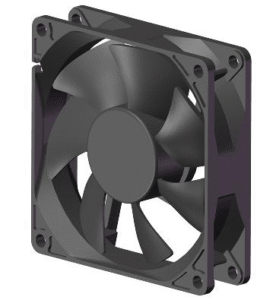
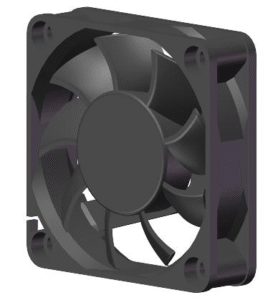
DC Axial Fans for Electronic Equipment
DC axial fans are commonly considered for compact electronic enclosures, communication systems, radar electronics, and control assemblies.
They provide airflow along the fan axis and are available in different dimensions and performance levels.
Important selection factors include:
- Rated voltage and operating voltage range
- Airflow and static pressure
- Fan dimensions and installation depth
- Bearing structure
- Signal functions such as PWM control and tachometer feedback
- Environmental configuration
For example, the SenharFans 7025A DC Axial Flow Fan measures 70 × 70 × 25mm and offers documented 12V, 24V, and 28V performance configurations.
Its highest documented performance level reaches 108.6 m³/h airflow and 150 Pa static pressure at 7,000 RPM.
The 7025A also offers a marine/naval environmental configuration. Its published specification includes 192-hour acidic salt-spray testing for the marine configuration.
This makes it a useful product to evaluate for compact marine electronic equipment requiring higher airflow and static pressure.
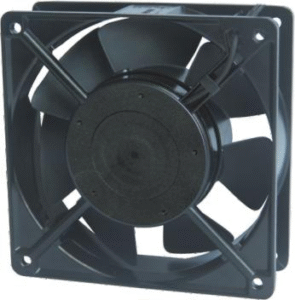
AC Axial Fans for Larger Equipment and Ventilation Systems
AC axial fans are suitable for equipment designed around AC power supplies, including industrial ventilation systems, electrical cabinets, and larger equipment enclosures.
When selecting an AC axial fan, engineers should review:
- Rated AC voltage and frequency
- Airflow and static pressure
- Fan diameter and mounting dimensions
- Power consumption
- Noise level
- Bearing type and specified service life
- Applicable environmental information
For larger ventilation requirements, SenharFans offers AC axial fan models in different frame sizes, including 120mm, 150mm, 180mm, and larger configurations.
The appropriate model depends on the required airflow, system resistance, electrical supply, and installation arrangement.
DC Blower Fans for Directed Airflow
Some marine electronic assemblies have narrow airflow channels or concentrated heat sources that require more directed airflow.
A DC blower fan can be considered for these applications.
Unlike an axial fan, a blower uses a centrifugal airflow structure to direct air through its outlet. This can be useful in compact equipment with specific ducting or internal airflow arrangements.
Selection should consider outlet geometry, available installation space, required pressure, and the complete airflow path.
4. Important Parameters When Selecting a Marine Cooling Fan
A suitable fan should be selected through a complete technical evaluation rather than a single performance figure.
| Selection Parameter | What Engineers Should Check |
|---|---|
| Airflow | Required ventilation volume and equipment heat dissipation |
| Static Pressure | Resistance from filters, grilles, ducts, and internal components |
| Performance Curve | Actual operating point under system resistance |
| Dimensions | Available installation space and mounting arrangement |
| Voltage | Compatibility with the equipment power supply |
| Noise | Acoustic requirements of the equipment installation |
| Bearing Type | Mechanical structure and operating requirements |
| Environmental Configuration | Temperature, humidity, salt spray, shock, and other applicable requirements |
| Signal Functions | PWM control, tachometer feedback, or fault alarm where required |
Airflow and Static Pressure Must Be Evaluated Together
A fan’s maximum airflow is generally measured under free-air conditions, while its maximum static pressure represents a different operating condition.
These two maximum values should not be assumed to occur simultaneously.
For marine equipment with filters, heat sinks, or narrow ventilation channels, the fan performance curve is particularly important.
Engineers should evaluate the intersection between the fan curve and the system resistance curve to estimate the actual operating airflow.
5. Environmental Specifications and Marine Application Requirements
For marine and naval equipment, environmental requirements should be reviewed at the product configuration level.
Relevant test categories may include:
- High-temperature storage and operation
- Low-temperature storage and operation
- Damp heat
- Salt spray
- Rain exposure
- Sand and dust
- Acceleration
- Mechanical shock
- Vibration
- Electromagnetic compatibility, where specified
It is important to distinguish between a test standard being referenced and a specific test level being documented.
For example, an environmental specification may identify a salt-spray duration but list no numerical vibration test level. These should be presented accurately rather than combined into a general claim of complete military environmental qualification.
SenharFans develops cooling fan products for specialized equipment applications and provides technical information to support product selection according to project requirements.
The environmental configuration should always be matched to the intended platform and the equipment manufacturer’s qualification requirements.
6. Marine Cooling Fan Applications
Cooling fans are used across a wide range of shipboard equipment.
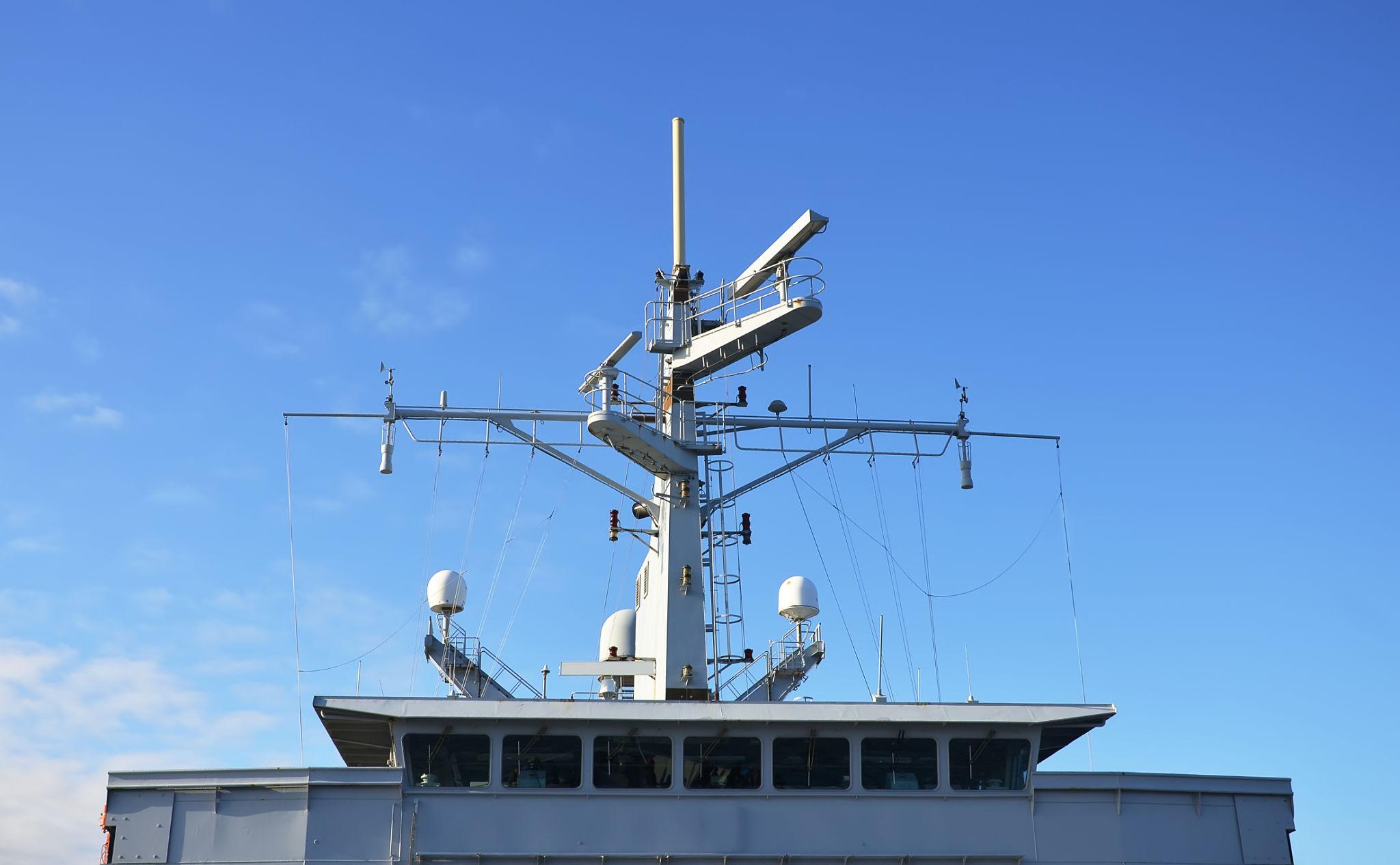
Radar and Navigation Electronics
Radar and navigation systems contain electronic processing and control assemblies that require effective heat removal.
Axial fans can be evaluated for equipment enclosures where sufficient ventilation openings and suitable airflow paths are available.
Shipboard Communication Systems
Communication equipment may operate continuously in enclosed cabinets or compact electronic assemblies.
The cooling solution should consider internal heat generation, installation depth, airflow resistance, and electrical interface requirements.
Marine Power and Control Equipment
Power conversion assemblies and control cabinets may require ventilation to remove heat generated by electrical components.
Depending on the equipment design, AC axial fans, DC axial fans, or blower fans can be considered.
Ship Automation and Monitoring Systems
Ship automation systems integrate sensors, controllers, communication modules, and monitoring electronics.
Compact DC axial fans and blower fans can be evaluated for localized cooling and enclosure ventilation.
Marine HVAC and Ventilation Equipment
Larger ventilation systems may require AC axial fans with suitable airflow and static pressure characteristics.
The final selection should account for the ventilation duct, system resistance, electrical supply, and installation environment.
7. SenharFans Marine Cooling Fan Solutions
SenharFans is a brand of Jiangsu Shenghang Electronic Technology Co., Ltd., specializing in cooling fans and thermal management solutions.
The company has obtained GJB 9001C-2017 Quality Management System Certification and a Class-II Confidentiality Qualification.
Its product range includes:
- DC Axial Fans
- AC Axial Fans
- DC Blower Fans
- Centrifugal Fans
- DC Condenser Fans
- Integrated Motor Assemblies
SenharFans products support equipment applications involving radar, marine electronics, industrial control, HVAC, and specialized electronic systems.
For marine-related projects, customers can discuss requirements such as:
- Rated voltage and performance selection
- Airflow and static pressure requirements
- Marine environmental configuration
- Signal and control functions
- Cable and connector arrangements
- OEM and ODM customization
Technical evaluation can be conducted according to the specific equipment design and project requirements.
8. How to Select the Right Marine Cooling Fan
Before selecting a cooling fan for shipboard equipment, equipment manufacturers and system integrators should prepare the following information:
- Equipment type and installation location
- Required airflow and estimated heat dissipation
- Available installation dimensions
- Required static pressure or system resistance
- DC or AC power supply and rated voltage
- Environmental requirements, including salt spray and humidity
- Required control and monitoring functions
With this information, the fan selection process can be more accurate and efficient.
The final choice should be based on the complete equipment design, not simply the largest airflow rating.
Contact SenharFans for Marine Cooling Fan Solutions
Looking for cooling fans for marine electronics, shipboard control systems, radar equipment, or marine HVAC applications?
SenharFans supports equipment manufacturers, distributors, and system integrators with DC axial fans, AC axial fans, and DC blower fans for specialized cooling requirements.
Contact our team to discuss your project and request technical information.
Email: sales@senharfans.com
Phone / WhatsApp: +86-138-1239-0890
Visit SenharFans to explore our cooling fan product range and discuss your marine thermal management requirements.