How to Choose the Right AC Axial Fan for Industrial and Electronic Equipment
Selecting the right AC axial fan is an important step in designing reliable cooling and ventilation systems. Whether the application involves industrial control cabinets, power electronics, HVAC equipment, radar systems, marine electronics, or other specialized equipment, the fan must match the actual thermal and operating requirements of the system.
A fan with a high rated airflow is not necessarily the best choice. Installation restrictions, system resistance, operating voltage, noise limits, temperature conditions, and expected service life all influence the final selection.
This guide explains the key factors engineers, equipment manufacturers, and purchasing professionals should consider when choosing an AC axial fan for industrial and electronic equipment.
1. Determine the Required Airflow
Airflow is one of the most important parameters when selecting a cooling fan. It describes the volume of air a fan can move, usually expressed in cubic meters per hour (m³/h) or cubic feet per minute (CFM).
The required airflow depends on the amount of heat generated by the equipment and the maximum temperature rise that can be accepted.
For an initial thermal estimate, the required airflow can be approximated using:
Required Airflow (m³/h) ≈ 3 × Heat Dissipation (W) ÷ Allowable Temperature Rise (°C)
For example, if equipment dissipates 300 W of heat and the allowable air temperature rise is 10°C:
Required Airflow ≈ 3 × 300 ÷ 10 = 90 m³/h
This is a simplified estimate based on typical air properties. Actual cooling requirements also depend on heat distribution, inlet air temperature, enclosure design, airflow paths, and installation conditions.
When selecting a fan, engineers should consider the actual airflow required inside the equipment rather than relying only on the maximum airflow listed in a product specification.
2. Understand Static Pressure and System Resistance
Airflow alone cannot determine whether a fan is suitable for a particular application.
Static pressure describes the fan’s ability to overcome resistance in the airflow path. Resistance may come from:
- Air filters and protective screens
- Heat sinks and densely arranged electronic components
- Narrow ventilation openings
- Ducts, bends, and air channels
- Protective grilles and other installation structures
As system resistance increases, the actual airflow delivered by a fan generally decreases.
This is why the fan performance curve is essential when selecting an AC axial fan.
How to Read a Fan Performance Curve
A typical fan performance curve shows the relationship between airflow and static pressure.
- The horizontal axis represents airflow.
- The vertical axis represents static pressure.
- The curve shows how airflow changes as system resistance increases.
The actual operating point is determined by the intersection of the fan performance curve and the system resistance curve.
A fan’s maximum airflow is generally measured under free-air conditions, with little or no external resistance. It should not be treated as the airflow that will automatically be achieved after installation.
For applications involving filters, heat sinks, dense electronic assemblies, or restricted ventilation passages, engineers should evaluate the performance curve at the required operating pressure.
3. Select the Appropriate Fan Size and Installation Dimensions
The fan must fit the available installation space while providing sufficient airflow and pressure performance.
Before choosing a model, confirm:
- Available mounting space
- Frame dimensions and mounting-hole positions
- Fan thickness or depth
- Air inlet and outlet clearance
- Required airflow direction
- Compatibility with the equipment enclosure
AC axial fans are available in different sizes and structural configurations, from compact fans for electronic enclosures to large-format fans for industrial ventilation and high-power equipment cooling.
For example, SenharFans offers different AC axial fan sizes for a range of equipment requirements:
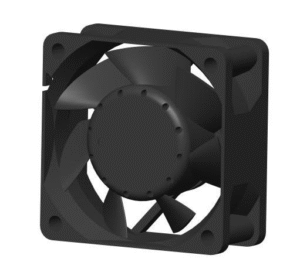
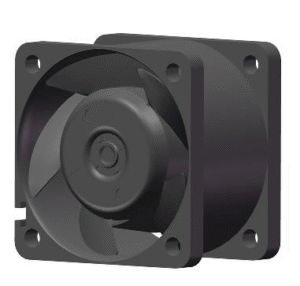
- 60 mm series: Compact cooling for smaller equipment and electronic assemblies.
- 80 mm and 92 mm series: Cooling for industrial control equipment and electrical enclosures.
- 120 mm series: General industrial and electronic equipment ventilation.
- 150 mm to 180 mm series: Higher-volume cooling for larger equipment.
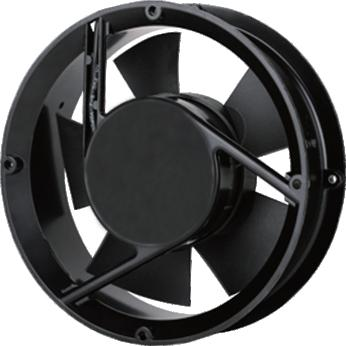
- 200 mm and larger series: High-airflow ventilation for large enclosures and specialized industrial systems.
The final selection should be based on the actual mechanical drawing and performance curve, not the nominal frame size alone.
4. Confirm the AC Voltage and Electrical Requirements
The electrical supply must match the fan’s rated operating conditions.
Important parameters include:
- Rated AC voltage
- Operating frequency (50 Hz or 60 Hz)
- Rated power consumption
- Rated rotational speed
- Starting and operating characteristics
- Electrical connection requirements
For example, many SenharFans AC axial fan models are designed for 220V AC / 50Hz operation. However, electrical specifications must always be checked against the exact model and its official datasheet.
Do not assume that two fans with similar dimensions have identical electrical characteristics.
For OEM projects and equipment manufacturers, confirming the power supply early in the selection process helps avoid installation and compatibility problems.
5. Consider Noise Level and Operating Conditions
Noise is another important factor, particularly for equipment installed near operators, in indoor facilities, or in environments where acoustic requirements are specified.
The noise level of an AC axial fan is normally expressed in dB(A).
When comparing products, consider:
- Rated noise level
- Rotational speed
- Airflow and static pressure requirements
- Installation structure
- Air turbulence and vibration transmitted to the enclosure
Noise figures should be compared under consistent test conditions. A lower noise value alone does not necessarily indicate better overall performance if the fan cannot meet the required airflow and pressure conditions.
The best selection balances cooling performance, electrical requirements, and acceptable noise levels for the intended application.
6. Evaluate Bearing Type and Rated Service Life
Bearing design influences fan operation and expected service life.
Dual ball bearings are commonly used in industrial cooling fans and specialized electronic equipment because of their suitability for continuous-duty applications and their ability to support stable shaft operation.
When evaluating service life, check:
- Bearing type
- Rated service life
- Reference operating temperature
- Operating speed
- Installation orientation, where specified
- Actual operating temperature and duty cycle
For example, some SenharFans AC axial fan models specify a rated service life of 50,000 hours at 40°C.
This figure should always be understood together with its stated test or reference condition. Actual service life depends on the operating environment, temperature, electrical conditions, and installation.
7. Check Environmental and Application Requirements
Industrial and specialized equipment may operate under demanding environmental conditions. The fan should therefore be selected according to the actual requirements of the equipment.
Consider the following factors:
Operating Temperature
Check the specified operating and storage temperature ranges. Make sure they match the equipment’s expected conditions.
Humidity and Moisture
For marine equipment and other humid environments, review the relevant moisture and corrosion-related requirements in the product documentation.
Salt Spray and Marine Conditions
Shipborne equipment may require additional environmental considerations. Confirm the applicable environmental configuration and supporting test information for the selected model.
Vibration and Mechanical Shock
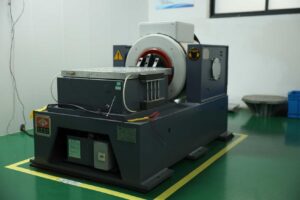
For airborne, vehicle-mounted, and other mobile equipment, check the model-specific vibration and shock requirements rather than assuming all fans in the same product family have identical environmental qualifications.
Specialized Equipment Standards
For defense, aerospace, and other specialized applications, review the applicable product specifications, environmental test records, and quality documentation.
SenharFans has obtained GJB 9001C-2017 Quality Management System Certification and a Class-II Confidentiality Qualification. Specific product environmental capabilities and compliance information should be confirmed against the documentation for the selected model.
8. Choose the Right AC Axial Fan for Your Application
Different equipment applications require different airflow, pressure, structural, and environmental characteristics.
Industrial Control Cabinets
Industrial control cabinets contain electrical components that generate heat during operation. The fan should provide sufficient airflow to remove heat while accounting for filters, grilles, and internal obstructions.
Power Supplies and Inverters
Power conversion equipment may generate concentrated heat around power modules, heat sinks, and electrical components. Fan selection should consider both the required airflow and the pressure loss through the cooling path.
Radar and Communication Equipment
Radar and communication systems require dependable thermal management for electronic assemblies and supporting equipment. Selection should consider airflow distribution, operating temperature, mechanical dimensions, and the relevant environmental requirements.
Marine and Shipborne Equipment
Marine electronics and shipboard electrical systems may operate under demanding temperature, humidity, and salt-related environmental conditions. Select a fan with an appropriate configuration for the intended marine application.
Airborne and Vehicle-Mounted Equipment
Weight, available installation space, vibration, shock, and environmental requirements can all influence fan selection. Confirm the exact product configuration and supporting technical documentation before finalizing the model.
HVAC and Industrial Ventilation
Larger AC axial fans are commonly used where substantial air circulation is required. The selected fan should match the ventilation system’s airflow and pressure requirements.
9. AC Axial Fan Selection Checklist
Before requesting a quotation, equipment manufacturers and purchasing teams should prepare the following information:
| Selection Item | Information to Confirm |
|---|---|
| Application | Industrial cabinet, power equipment, radar, marine, HVAC, etc. |
| Required Airflow | m³/h or CFM |
| Required Static Pressure | Pa |
| Installation Dimensions | Width, height, diameter, and thickness |
| Rated Voltage | AC voltage |
| Operating Frequency | 50 Hz or 60 Hz |
| Power Requirement | Available electrical capacity |
| Noise Requirement | Maximum acceptable dB(A), if specified |
| Operating Temperature | Minimum and maximum temperature |
| Environmental Conditions | Humidity, salt spray, vibration, shock, etc. |
| Quantity | Prototype, trial order, or mass production |
| Documentation | Datasheet, performance curve, mechanical drawing, and applicable test information |
If some parameters are not yet available, the equipment manufacturer can provide the enclosure dimensions, heat dissipation, installation drawings, and operating conditions for an initial technical evaluation.
10. Why Choose SenharFans AC Axial Fans?
SenharFans is the thermal-management brand of Jiangsu Shenghang Electronic Technology Co., Ltd., specializing in the development and manufacturing of cooling fans for industrial, defense, aerospace, marine, and electronic equipment applications.
The company offers a range of AC axial fans in different sizes and performance configurations, supporting equipment manufacturers, OEM customers, and specialized system integrators.
Key company capabilities include:
- GJB 9001C-2017 Quality Management System Certification
- Class-II Confidentiality Qualification
- Airflow and acoustic performance testing facilities
- High- and low-temperature, damp-heat, salt-spray, and other environmental testing capabilities
- Engineering development and product customization support
- Experience supporting research and equipment manufacturing organizations associated with major Chinese industrial groups
From compact AC axial fans to large-format, high-airflow cooling solutions, SenharFans supports customers in selecting suitable products according to their equipment requirements.
Request Technical Support and a Quotation
Choosing the right AC axial fan requires more than comparing maximum airflow figures. Airflow, static pressure, dimensions, electrical specifications, noise, service life, and environmental conditions should all be considered together.
If you are sourcing AC axial fans for industrial equipment, electronic enclosures, radar systems, marine applications, or other specialized equipment, contact SenharFans for technical information and product selection support.
Jiangsu Shenghang Electronic Technology Co., Ltd. – SenharFans
- Email: sales@senharfans.com
- Phone / WhatsApp: +86-138-1239-0890
- Website: https://senharfans.com/
Send us your application details and technical requirements. Our team can help identify suitable AC axial fan models for your project.