
UAV Electronics Cooling Solution – Selecting Axial Fans for Low-Pressure Environments
Unmanned aerial vehicles (UAVs) rely heavily on onboard electronics such as flight controllers, communication modules, radar sensors, and power management systems. These electronic components generate heat during operation, making efficient thermal management essential for maintaining system reliability.
However, cooling electronic systems in UAV platforms presents unique challenges compared with traditional ground-based equipment.
Thermal Challenges in UAV Electronics
UAV systems operate under conditions that make heat dissipation more difficult.
Common challenges include:
Low air density at altitude
As altitude increases, air density decreases. Lower air density reduces the cooling capacity of airflow.
Compact electronic modules
UAV avionics systems are often densely integrated in small enclosures.
Limited power consumption
Cooling systems must maintain efficiency while minimizing power usage.
Because of these factors, the cooling design of UAV electronics requires careful fan selection and airflow management.
Why Axial Fans Are Commonly Used
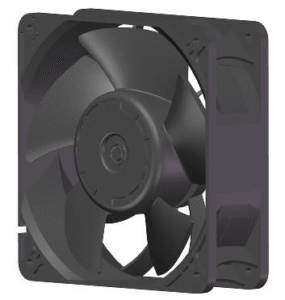
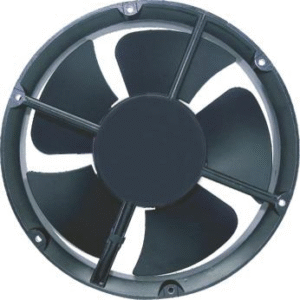
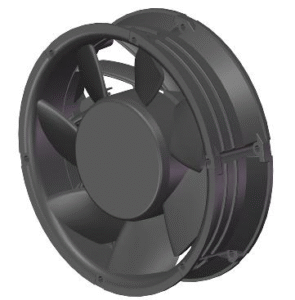
Axial fans are widely used in UAV electronics cooling because they offer several advantages.
Key benefits include:
-
High airflow relative to size
-
Compact structure
-
Lightweight design
-
Efficient air movement within electronic enclosures
These characteristics make axial fans suitable for cooling avionics modules and communication systems inside UAV platforms.
Key Parameters When Selecting UAV Cooling Fans
When engineers select fans for UAV electronic systems, several technical parameters must be evaluated.
Airflow Performance
Sufficient airflow is necessary to remove heat from electronic components.
Engineers typically calculate airflow requirements based on heat load and temperature limits within the system.
Static Pressure Capability
In compact UAV electronics compartments, airflow resistance can be created by:
-
heat sinks
-
structural frames
-
cable routing
Fans with higher static pressure can maintain airflow even when resistance increases.
Weight Considerations
Weight is a critical factor in aerospace systems.
Cooling fans used in UAV platforms must provide sufficient airflow while maintaining lightweight construction.
Reliability
UAV systems may operate in environments with vibration, temperature variation, and long mission durations.
Cooling fans must therefore provide:
-
long service life
-
stable performance
-
reliable bearings
Dual ball bearing fans are often preferred in high-reliability aerospace electronics systems.
Typical Applications in UAV Systems
Cooling fans are commonly used in several UAV electronic subsystems, including:
-
Flight control computers
-
Communication modules
-
Radar or sensor systems
-
Power distribution modules
-
Data processing units
Proper airflow management helps maintain stable operating temperatures and ensures reliable system performance.
Conclusion
Thermal management plays a critical role in the reliability of UAV electronics.
When selecting cooling fans for UAV platforms, engineers must carefully consider:
-
airflow requirements
-
static pressure capability
-
weight constraints
-
reliability under vibration and temperature variation
A properly designed cooling solution helps ensure stable operation of avionics systems during UAV missions.