Cooling Fans for Vehicle-Mounted Electronics: How to Select the Right Fan for Rugged Equipment
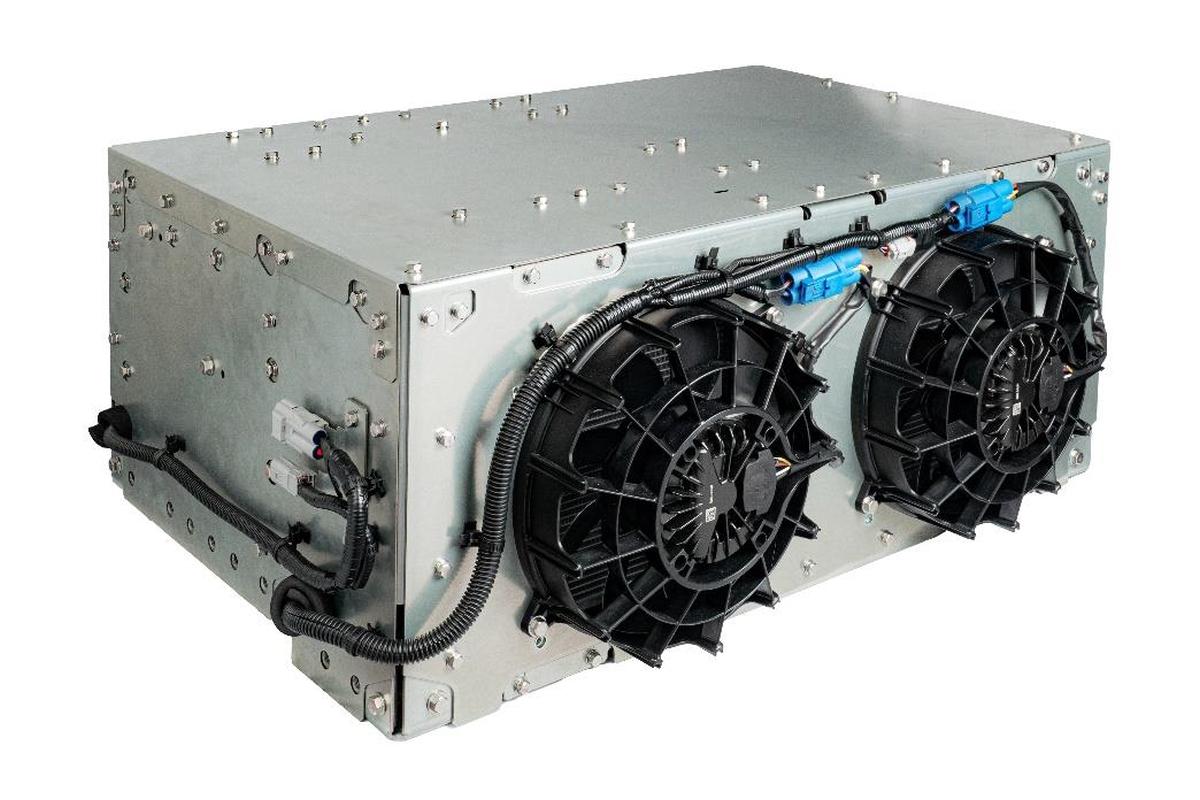
Vehicle-mounted electronic equipment operates in an environment where cooling requirements go beyond those of conventional stationary industrial systems. Limited installation space, fluctuating power supply, vibration, dust, temperature variations, and restricted airflow can all affect thermal performance.
From communication systems and control units to power electronics and equipment enclosures, effective cooling is essential to maintaining stable operating temperatures and supporting long-term equipment reliability.
Selecting a cooling fan for vehicle-mounted electronics therefore requires more than choosing a fan with a high airflow rating. Engineers must evaluate airflow, static pressure, mounting conditions, electrical compatibility, mechanical design, and the actual operating environment.
1. Why Vehicle-Mounted Electronics Require Careful Cooling Design
Vehicle electronic systems are often installed in compact enclosures with limited ventilation space. Heat generated by electronic components may accumulate quickly, particularly when equipment operates continuously or under high electrical loads.
Compared with stationary installations, vehicle-mounted equipment may also experience:
- Continuous vibration transmitted through the vehicle structure
- Mechanical shock during operation or transportation
- High ambient temperatures and temperature fluctuations
- Dust and restricted air circulation
- Fluctuations in the vehicle’s electrical power supply
- Limited installation space and airflow paths
These conditions make cooling fan selection an important part of the overall equipment design.
A fan that performs well in an open-air test may deliver significantly less airflow when installed behind filters, protective grilles, ducts, or densely packed electronic components.
2. Airflow Is Only One Part of Fan Selection
One of the most common mistakes in cooling system design is selecting a fan based only on its maximum airflow.
The airflow listed in a fan datasheet is generally measured under a defined test condition. Once the fan is installed in an enclosure, airflow resistance changes its operating point.
Factors affecting actual airflow include:
- Air inlet and outlet openings
- Protective filters and grilles
- Heat sinks and component spacing
- Internal cables and wiring harnesses
- Ducts and bends
- Equipment enclosure geometry
For vehicle-mounted electronic systems, engineers should evaluate both airflow and static pressure.
A fan with higher static pressure capability may be more suitable for an enclosure with restrictive airflow paths, while a fan with higher airflow under low resistance may be appropriate for a more open ventilation arrangement.
The fan’s airflow-pressure curve should be reviewed alongside the estimated system resistance to determine its actual operating point.
3. Selecting the Appropriate Fan Size
The available installation space often determines the maximum fan dimensions.
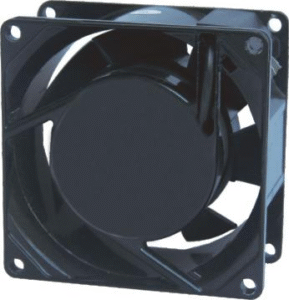
Common DC axial fan sizes used in electronic equipment include:
- 40×40mm
- 60×60mm
- 80×80mm
- 92×92mm
- 120×120mm
Larger fans may provide higher airflow at lower rotational speeds in certain designs, but the final selection depends on fan geometry, speed, pressure requirements, noise limits, and available mounting space.
For compact vehicle-mounted equipment, engineers should consider:
- Maximum installation dimensions
- Fan thickness
- Mounting hole positions
- Clearance around the inlet and outlet
- Required airflow direction
- Cable routing and connector space
- Serviceability and replacement access
A fan should not be selected based on dimensions alone. Its performance must be evaluated under the actual installation conditions.
4. Bearing Structure and Mechanical Reliability
The bearing system is another important consideration for equipment operating in mobile environments.
Dual ball bearing fans are commonly considered for applications requiring mechanical stability and flexible installation orientation. However, bearing type alone does not establish a fan’s vibration or shock qualification.
The complete fan assembly must be evaluated, including:
- Bearing structure
- Rotor and impeller balance
- Frame rigidity
- Mounting arrangement
- Fasteners
- Electrical connections
- Operating speed
- Environmental test requirements
For equipment exposed to vibration or shock, the required test conditions should be defined according to the vehicle platform and equipment installation location.
It is important to distinguish between vibration testing, shock testing, and acceleration testing. These represent different environmental conditions and should not be treated as interchangeable specifications.
5. Electrical Compatibility with Vehicle Power Systems
Vehicle electrical systems may experience voltage fluctuations during startup, load changes, and other operating conditions.
Selecting the correct rated voltage is essential for stable fan operation.
Common DC fan voltage options include:
- 5V DC
- 12V DC
- 24V DC
- 28V DC
- 48V DC
The actual availability depends on the fan model.
Before selecting a fan, engineers should confirm:
- Rated voltage
- Operating voltage range
- Startup voltage
- Current consumption
- Power consumption
- Electrical protection requirements
- Connector and wiring specifications
The fan should be evaluated against the actual power supply characteristics of the equipment rather than nominal voltage alone.
For systems requiring automatic thermal management, PWM speed control may also be considered.
6. Intelligent Monitoring and Thermal Management
Modern vehicle-mounted electronic equipment may require continuous monitoring of its cooling system.
Depending on the fan model and configuration, available signal functions can include:
- PWM speed control
- Tachometer feedback
- Fan fault alarm
- Speed regulation according to temperature
- Integration with equipment monitoring systems
These functions allow the equipment controller to adjust fan speed according to thermal demand or monitor the fan’s operating status.
For applications requiring intelligent thermal management, signal configuration should be confirmed during the fan selection and system integration process.
7. Environmental Protection and Application-Specific Testing
The environmental requirements of vehicle-mounted electronics vary significantly depending on the platform, installation location, and intended operating conditions.
Potential environmental considerations include:
- High and low temperature operation
- Humidity and condensation
- Dust exposure
- Salt-laden atmosphere
- Vibration
- Mechanical shock
- Acceleration
- Electromagnetic compatibility
- Power supply characteristics
Not every vehicle-mounted application requires the same environmental qualification.
A fan used inside a protected electronic enclosure may have different requirements from one installed in an exposed compartment or near an external ventilation opening.
Environmental test requirements should therefore be determined according to the actual application. Where applicable, testing may reference relevant military or industrial environmental standards, but the required test level and configuration must be verified for the specific fan and project.
8. Axial Fans or Blowers: Which Is Better?
Axial fans and centrifugal blowers serve different airflow requirements.
DC Axial Fans
Axial fans move air approximately parallel to the fan shaft.
They are commonly used for:
- Electronic enclosure ventilation
- Control cabinet cooling
- Communication equipment
- Power supply cooling
- General forced-air cooling
- Equipment with relatively direct airflow paths
Axial fans are often a practical choice where installation space, airflow volume, and system resistance can be balanced within a compact design.
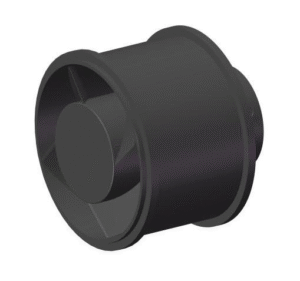
DC Centrifugal Blowers
Centrifugal blowers discharge air in a direction different from the inlet flow and are often considered when the cooling system requires more directed airflow or must overcome a relatively restrictive air path.
They may be suitable for:
- Narrow airflow channels
- Ducted cooling systems
- Compact electronic assemblies
- Concentrated airflow requirements
- Systems with higher airflow resistance
The appropriate solution depends on the enclosure design and the required airflow-pressure operating point.
9. Cooling Fan Selection Checklist for Vehicle-Mounted Equipment
Before selecting a fan, engineers and equipment designers should confirm the following requirements:
| Selection Item | Key Question |
|---|---|
| Heat Load | How much heat must be removed? |
| Required Airflow | What airflow is needed under actual operating conditions? |
| Static Pressure | How restrictive is the installed airflow path? |
| Installation Space | What are the maximum fan dimensions and thickness? |
| Rated Voltage | Is the fan compatible with the system power supply? |
| Operating Temperature | What are the required ambient and operating temperature limits? |
| Bearing Structure | What mechanical configuration is required? |
| Vibration & Shock | What environmental test levels are required? |
| Signal Functions | Is PWM, tachometer, or fault monitoring required? |
| Environmental Protection | Is dust, humidity, salt spray, or other testing required? |
| Maintenance | Is replacement or servicing required during equipment operation? |
Reviewing these requirements before finalizing the cooling system helps reduce the risk of insufficient airflow, installation conflicts, and electrical compatibility issues.
10. SenharFans DC Axial Fans for Vehicle-Mounted Cooling Applications
SenharFans provides DC axial fan solutions in multiple dimensions, voltage configurations, airflow ranges, and signal-function options for industrial electronics and specialized equipment cooling.
For projects requiring compact cooling solutions, the selection process can begin with the available installation dimensions and then evaluate airflow, static pressure, voltage, and environmental requirements.
Examples of product families for engineering evaluation include:
- 12025B DC Axial Flow Fan – 120×120×25mm format with multiple speed and voltage configurations.
- 9238D DC Axial Flow Fan – 92×92×38mm format with multiple performance configurations.
- 9238E DC Axial Flow Fan – 92×92×38mm format offering a different airflow and pressure performance profile.
Final fan selection should be based on the system’s thermal requirements, installation conditions, and environmental specifications.
Conclusion
Cooling vehicle-mounted electronics requires a comprehensive approach to thermal management.
Airflow, static pressure, mounting dimensions, bearing structure, electrical compatibility, vibration, shock, and environmental requirements all contribute to the selection of an appropriate cooling fan.
By evaluating the fan together with the installed cooling system, engineers can develop more effective thermal management solutions for vehicle-mounted electronics, control systems, communication equipment, and specialized industrial platforms.
SenharFans supports cooling fan selection and technical consultation for industrial and specialized equipment applications.
For product specifications, airflow curves, technical drawings, or customized cooling requirements, contact our team.
Jiangsu Shenghang Electronic Technology Co., Ltd.
Email: sales@senharfans.com
Phone / WeChat / WhatsApp: +86-138-1239-0890
Website: https://senharfans.com