33278A DC Condenser Fan: Cooling for Industrial Condensing and Heat Exchange Systems
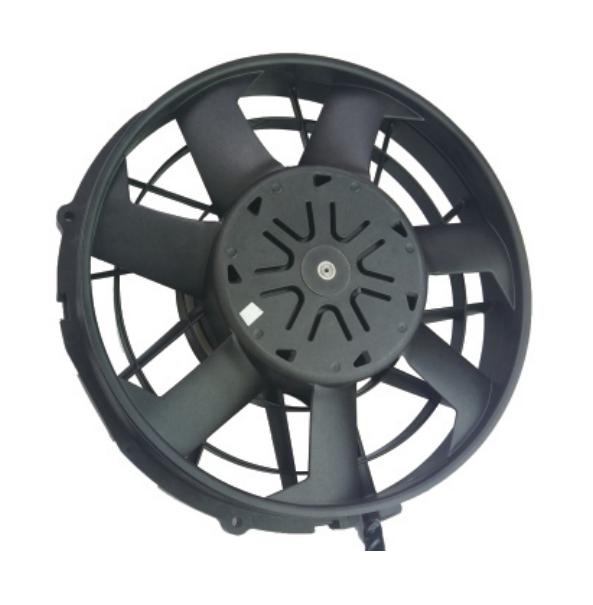
The 33278A DC Condenser Fan is a large-format cooling fan designed for condenser units and thermal management equipment that require reliable airflow for heat dissipation.
With a diameter of 332 mm and a thickness of 78 mm, the 33278A combines an aluminum alloy frame, an engineering plastic impeller, and a dual ball bearing structure. Its mechanical design makes it suitable for integration into industrial condensing equipment and other large heat exchange systems.
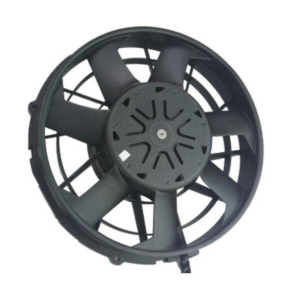
1. Mechanical Design and Specifications
The 33278A features a large-diameter structure designed for condenser and heat exchange applications.
| Parameter | Specification |
|---|---|
| Model | 33278A |
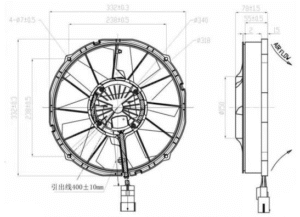
| Dimensions | Φ332 × 78 mm |
| Frame Material | Aluminum Alloy |
| Impeller Material | Engineering Plastic |
| Bearing Structure | Dual Ball Bearings |
| Weight | 2,100 g |
The aluminum alloy frame provides structural support for the fan assembly, while the engineering plastic impeller forms the rotating airflow component. The dual ball bearing structure supports continuous operation in equipment cooling applications.
2. Airflow Performance and Cooling Requirements
In condenser systems, fan performance directly affects the movement of air across the heat exchanger. The airflow requirement depends on the condenser design, heat load, installation conditions, and airflow resistance.
When evaluating the 33278A DC condenser fan, engineers should consider:
- Airflow Capacity: The required air volume for heat exchange under the intended operating conditions.
- Static Pressure: The pressure capability needed to overcome resistance from condenser coils, protective grilles, and other airflow restrictions.
- Electrical Requirements: Rated voltage, operating voltage range, and power consumption.
- Operating Noise: The acceptable acoustic level for the equipment and installation environment.
- Installation Space: Fan diameter, thickness, mounting arrangement, and airflow direction.
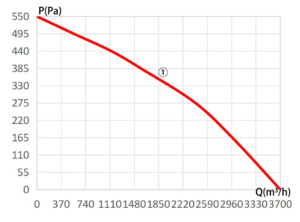
The fan’s actual operating point should be evaluated using its airflow-pressure performance curve together with the resistance characteristics of the complete condenser system.
For detailed performance data, including rated speed, airflow, static pressure, power consumption, and noise level, please refer to the latest 33278A product specification or contact SenharFans.
3. DC Motor and Control Options
DC condenser fans can be integrated into thermal management systems with different electrical and control requirements.
Depending on the selected 33278A configuration, available options should be confirmed for:
- Rated DC voltage
- Operating voltage range
- PWM duty-cycle speed control
- Tachometer (RPM) feedback
- High-level fault alarm
- Combined speed control and monitoring functions
These functions can help equipment manufacturers integrate fan operation into their system-level temperature management and monitoring strategies.
Please confirm the required electrical interface and signal configuration when requesting a quotation.
4. Mechanical Integration and Installation
The 33278A’s Φ332 × 78 mm form factor should be considered during condenser design and equipment integration.
Before installation, engineers should check:
- Mounting Dimensions: Confirm the available installation space and mounting-hole arrangement.
- Airflow Direction: Ensure the fan’s airflow direction matches the condenser’s heat exchange design.
- Airflow Clearance: Allow sufficient space around the fan inlet and outlet to avoid unnecessary airflow restriction.
- System Resistance: Consider condenser coil density, protective grilles, and other components that may affect airflow.
- Electrical Compatibility: Confirm the rated voltage, operating range, power consumption, and control interface.
Correct fan selection and installation help the condenser system achieve its intended airflow performance.
5. Typical Applications
The 33278A DC condenser fan is intended for condenser and heat exchange applications where a large-diameter fan is required.
Potential application areas include:
- DC Condenser Units: Air movement across condenser coils in DC-powered condensing equipment.
- HVAC Systems: Cooling and ventilation in selected heating, ventilation, and air conditioning equipment.
- Industrial Refrigeration: Airflow management for industrial cooling and refrigeration equipment.
- Power and Electronic Equipment: Heat dissipation in equipment incorporating dedicated heat exchange modules.
- Industrial Thermal Management: Cooling applications requiring a large-diameter DC fan.
Final suitability depends on the system’s heat load, condenser design, airflow resistance, electrical requirements, and operating environment.
6. How to Select a DC Condenser Fan
Choosing a suitable condenser fan requires more than checking its diameter or maximum airflow.
Equipment manufacturers should evaluate the following factors:
- Required heat rejection and airflow capacity
- Condenser coil dimensions and airflow resistance
- Static pressure at the intended operating point
- Rated voltage and power consumption
- Noise requirements
- Installation dimensions and mounting arrangement
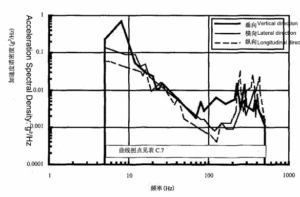
- Operating temperature and environmental conditions
- Control and monitoring requirements
For OEM projects, providing the condenser specifications, required airflow, electrical requirements, and installation drawings will help the engineering team assess the appropriate fan configuration.
7. Contact SenharFans
SenharFans supplies DC condenser fans, DC axial fans, DC blower fans, and other cooling solutions for industrial and thermal management applications.
If you are evaluating the 33278A DC Condenser Fan for your condenser or HVAC project, contact our team for detailed specifications, performance curves, and configuration support.
Email: sales@senharfans.com
Phone / WhatsApp: +86-138-1239-0890
Website: https://senharfans.com/