7 Questions Every OEM Should Ask Before Selecting an Industrial Cooling Fan
Introduction
In many industrial systems, overheating is one of the most common causes of unexpected equipment failure. Designers often focus on processors, power supplies, and software while overlooking one critical component—the cooling fan.
Selecting an industrial cooling fan is not simply a matter of choosing the model with the highest airflow. The right axial fan or cooling fan must operate reliably throughout the entire product lifecycle while matching the environmental conditions, airflow resistance, and maintenance expectations of the application.
Whether your project involves HVAC systems, control cabinet cooling, marine ventilation, radar cooling, or airborne electronics cooling, choosing the correct fan at the design stage can significantly improve system reliability and reduce total operating costs.
This guide highlights seven practical questions every OEM should ask before selecting a cooling solution.
1. What Is the Actual Heat Load?
The first step is understanding how much heat must be removed.
Instead of selecting a fan based solely on its advertised airflow, engineers should calculate:
- Total power dissipation (W)
- Maximum ambient temperature
- Allowable internal cabinet temperature
- Required airflow
A properly sized thermal management solution balances cooling performance with energy consumption, noise, and product lifespan.
Oversized fans increase power consumption and acoustic noise.
Undersized fans shorten the life of electronic components.
2. Will the Fan Still Deliver Airflow Under System Resistance?
Many published airflow values are measured under free-air conditions.
Real systems rarely operate this way.
Airflow resistance comes from:
- Dust filters
- Heat sinks
- Cable routing
- Protective grilles
- Ventilation ducts
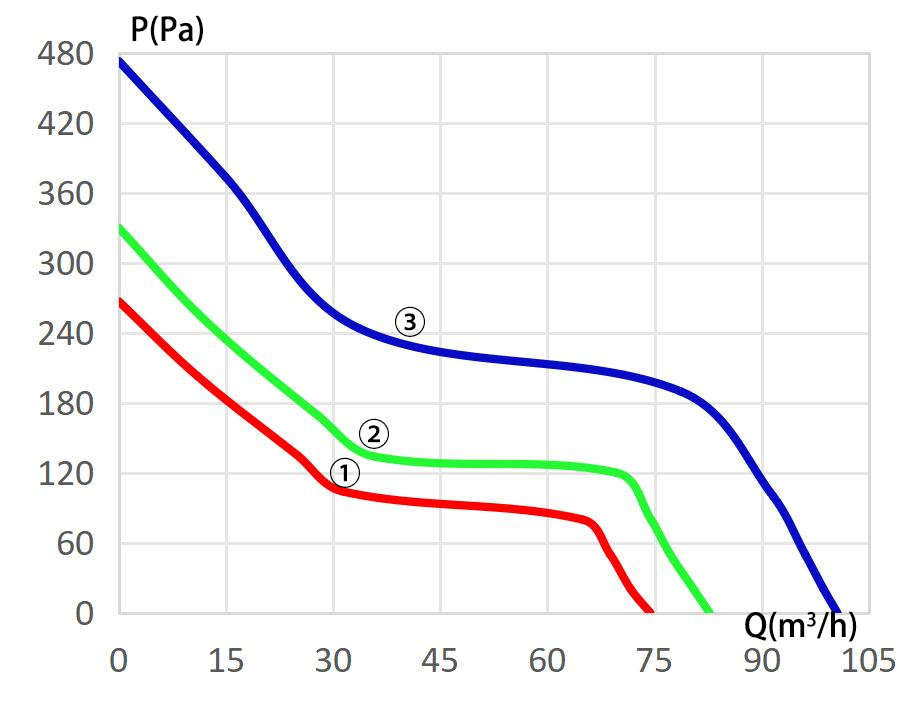
This is why static pressure matters.
A high-quality axial fan should maintain stable airflow even after filters become partially clogged or airflow paths become more restrictive over time.
Always review the fan’s pressure-flow (P-Q) curve rather than relying only on maximum CFM.
3. What Environment Will the Fan Operate In?
Different environments require different protection levels.
Typical industrial applications include:
- Outdoor telecom cabinets
- Marine equipment
- Radar shelters
- Factory automation
- Railway electronics
- HVAC systems
Each environment presents unique challenges such as:
- High temperature
- Dust
- Salt spray
- Humidity
- Vibration
- Continuous operation
Selecting the appropriate IP protection level, corrosion-resistant materials, and conformal coating helps ensure long-term reliability.
4. Is Energy Efficiency Important?
Cooling systems often operate continuously.
Even modest improvements in efficiency can reduce operating costs over thousands of hours.
Compared with traditional solutions, modern electronically controlled EC fans and high-performance brushless DC axial fans provide several advantages:
- Higher efficiency
- Lower power consumption
- Precise speed regulation
- Reduced heat generation
- Improved overall system performance
For applications with variable thermal loads, intelligent speed control can further optimize energy use without compromising cooling performance.
5. How Long Is the Expected Service Life?
Replacing a failed fan inside an industrial cabinet may require significant downtime.
For remote installations, maintenance costs often exceed the price of the fan itself.
A reliable high reliability cooling system should include:
- Long-life dual ball bearings
- High-quality electronic components
- Stable motor control
- Balanced impellers
- Comprehensive production testing
Long service life reduces maintenance frequency and improves equipment availability throughout the system lifecycle.
6. Can the Fan Be Customized for Your Equipment?
Standard products do not always meet specialized requirements.
Many OEM projects require customized solutions, including:
- Different voltages
- PWM speed control
- Tachometer outputs
- Alarm signals
- Connector options
- Special mounting dimensions
- Enhanced environmental protection
Working with an experienced OEM fan supplier allows manufacturers to optimize cooling performance without redesigning the entire system.
At SenharFans, we support flexible OEM and ODM development for industrial, marine, and defense-related applications.
7. Can Your Supplier Support You for the Long Term?
Choosing a cooling fan is not just purchasing a component—it is selecting a long-term manufacturing partner.
Before making a decision, consider whether your supplier offers:
- Stable production capacity
- Consistent quality management
- Engineering support
- Product traceability
- Technical documentation
- Long-term product availability
These factors become increasingly important for products with service lives of ten years or more.
Reliable supply continuity helps reduce future redesign costs and protects your production schedule.
Applications That Benefit from Reliable Thermal Management
Industrial cooling fans are widely used in:
- HVAC systems
- Control cabinet cooling
- Industrial automation
- Outdoor telecom equipment
- Radar cooling
- Marine ventilation
- Airborne electronics cooling
- Naval systems cooling
- Power electronics
- Energy storage systems
Each application requires a different balance between airflow, pressure, environmental protection, and lifecycle reliability.
Selecting the right industrial airflow solution ensures stable performance under real operating conditions.
Why Choose SenharFans?
SenharFans focuses on high-performance thermal management solutions for demanding industrial environments.
Our capabilities include:
- Brushless DC axial fans
- AC axial fans
- DC blower fans
- OEM and ODM development
- Environmental testing
- Salt spray testing
- High and low temperature testing
- Vibration testing
- Airflow performance verification
Our products are widely applied in industrial equipment, radar systems, marine electronics, airborne platforms, and other applications where dependable cooling is essential.
Rather than offering one-size-fits-all products, we work closely with customers to develop solutions that match their specific operating conditions and performance requirements.
Conclusion
Selecting the right cooling fan is about much more than airflow specifications.
Environmental conditions, system resistance, efficiency, expected lifespan, and supplier capability all influence the long-term reliability of your equipment.
By evaluating these factors early in the design process, OEM manufacturers can improve product performance, reduce maintenance costs, and build more dependable systems.
If you’re looking for a reliable thermal management solution for industrial, marine, HVAC, radar, or airborne applications, choosing the right engineering partner is just as important as choosing the right fan.
Contact SenharFans
Looking for an experienced OEM cooling solution provider?
Whether you are developing a new product or upgrading an existing system, our engineering team can help you select the right fan for your application.
Contact us today for technical consultation, product recommendations, or an RFQ.
Website: https://senharfans.com
Email: sales@senharfans.com