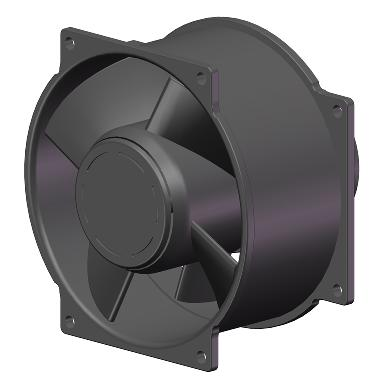
Why Does Your Cooling Fan Still Fail Even When the Specifications Look Correct?
Introduction
One of the most common questions engineers ask during thermal troubleshooting is:
“The cooling fan meets the specifications, so why is my equipment still overheating?”
At first glance, the answer seems simple. If the airflow rating matches the calculated cooling requirement, the system should operate within its intended temperature range.
However, real-world applications often tell a different story.
In many industrial systems, overheating is not caused by the cooling fan itself. Instead, it results from airflow restrictions, enclosure design, heat distribution, or installation details that reduce cooling efficiency.
Whether your application involves industrial automation, HVAC systems, control cabinet cooling, radar electronics, or marine equipment, understanding the complete airflow path is essential for building a reliable thermal management solution.
1. Airflow Rating Is Only One Part of the Equation
Many buyers compare fans by looking at one specification: airflow (CFM or m³/h).
While airflow is important, published values are typically measured under free-air conditions.
Once a fan is installed inside equipment, airflow can decrease due to:
- Air filters
- Heat sinks
- Cable routing
- Protective grilles
- Narrow ventilation channels
A fan that performs well on paper may deliver much lower airflow in actual operation.
For this reason, engineers should evaluate system resistance as well as airflow requirements during the selection process.
2. Poor Airflow Paths Reduce Cooling Efficiency
Even a high-performance axial fan cannot cool equipment effectively if air cannot move freely through the enclosure.
Common airflow design issues include:
- Air inlets positioned too close to exhaust outlets
- Internal components blocking airflow
- Dead zones where hot air becomes trapped
- Sharp airflow turns inside compact enclosures
A well-designed ventilation system creates a continuous airflow path from cool air intake to warm air exhaust.
This principle is equally important for industrial control cabinets, HVAC equipment, and electronic systems.
3. Hot Air Recirculation Is Often Overlooked
One of the most common causes of overheating is hot air recirculation.
Instead of removing warm air from the enclosure, the fan repeatedly draws the same heated air back through the system.
This can happen when:
- Intake and exhaust openings are too close together
- Equipment is installed against walls or obstacles
- Exhaust airflow is blocked by nearby components
Even with sufficient airflow capacity, recirculated hot air reduces cooling effectiveness and raises internal temperatures.
Proper enclosure layout is often just as important as fan selection.
4. Static Pressure Matters More Than Many Engineers Expect
Not every cooling application operates under free-air conditions.
Dust filters, dense heat sinks, protective screens, and ducted airflow paths all increase static pressure.
When resistance rises, airflow decreases.
Selecting a fan solely because it offers the highest free-air airflow may not deliver the desired cooling performance once installed.
For applications such as:
- Control cabinet cooling
- Outdoor telecom equipment
- Radar cooling
- Industrial automation
both airflow and pressure capability should be evaluated together.
5. Cooling Requirements Change Over Time
Many systems perform well during initial testing but experience higher temperatures after months or years of operation.
Several factors contribute to this change:
- Dust accumulation on filters
- Aging thermal interface materials
- Higher ambient temperatures
- Equipment upgrades that increase power consumption
Designing with an appropriate airflow margin helps maintain reliable cooling throughout the product’s service life.
Practical Recommendations for Better Thermal Management
When selecting a cooling fan, consider the entire system rather than the fan alone.
A practical design review should include:
- Actual heat generation
- Airflow resistance
- Enclosure layout
- Intake and exhaust locations
- Environmental conditions
- Future maintenance requirements
These considerations often have a greater impact on cooling performance than choosing a fan with a slightly higher airflow rating.
How SenharFans Supports Better Cooling System Design
At SenharFans, we believe effective cooling starts with understanding the application—not simply recommending the largest fan available.
We work with OEM manufacturers and system integrators to develop thermal management solutions for a wide range of industries, including:
- HVAC systems
- Industrial automation
- Control cabinet cooling
- Marine ventilation
- Radar systems
- Airborne electronics
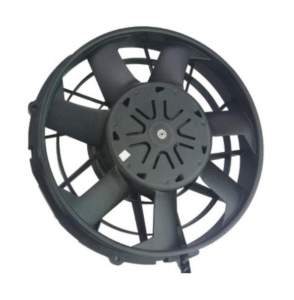
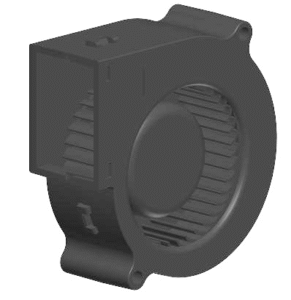
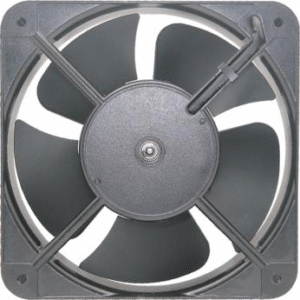
In addition to supplying DC axial fans, centrifugal blowers, AC axial fans, and EC fan solutions, we support customers with application analysis and product customization to help improve overall cooling performance.
Why OEM Customers Work with SenharFans
Reliable thermal management requires more than quality components.
It requires engineering collaboration.
SenharFans provides:
- OEM and ODM customization
- Engineering support during product selection
- Airflow testing and verification
- Environmental and reliability testing
- Flexible manufacturing for long-term projects
Our objective is to help customers develop cooling systems that remain reliable throughout the entire product lifecycle.
Conclusion
If your equipment is overheating despite using a fan that meets the required specifications, the fan itself may not be the real issue.
Airflow path design, enclosure layout, static pressure, and environmental conditions all influence cooling performance.
By evaluating the complete thermal management system rather than a single specification, engineers can improve equipment reliability, reduce maintenance, and extend service life.
Whether your application involves industrial equipment, HVAC systems, radar cooling, marine ventilation, or other demanding environments, thoughtful thermal design is the foundation of dependable performance.
Contact SenharFans
Looking for a reliable OEM fan supplier or expert guidance on your next thermal management project?
Our engineering team is ready to help you select the right cooling solution for your application.
SenharFans – High-Reliability Thermal Management Solutions