What Information Should You Prepare Before Requesting an Industrial Cooling Fan Quote?
Primary Keyword: industrial cooling fan quote
Secondary Keywords: OEM cooling fan supplier, custom cooling fan, industrial fan RFQ, cooling fan manufacturer, DC axial fan specifications
Introduction
Requesting a quotation for an industrial cooling fan may seem straightforward. However, a fan supplier needs more than a product name or a requested quantity to recommend a suitable solution.
Airflow requirements, system resistance, installation dimensions, operating voltage, environmental conditions, and control functions can all affect fan selection, pricing, and lead time.
For OEM manufacturers and engineering teams, preparing the right information before sending an RFQ can reduce unnecessary communication, improve quotation accuracy, and help identify potential technical issues earlier in the project.
This guide explains the key information to include when requesting a quotation from an industrial cooling fan manufacturer.
1. Explain the Application
Start by explaining where and how the fan will be used.
For example, is the fan intended for:
- Industrial control cabinets
- HVAC equipment
- Marine electronics
- Radar or communication systems
- Airborne or vehicle-mounted electronics
- Industrial machinery or power equipment
The application helps the supplier understand the operating environment and the purpose of the cooling system.
If possible, also describe what the fan needs to cool, whether it will operate continuously, and whether the equipment has any special reliability or environmental requirements.
Why this matters: A fan suitable for a general industrial enclosure may not automatically meet the environmental or reliability requirements of marine, outdoor, or other demanding applications.
2. Define the Required Airflow and Static Pressure
Airflow and static pressure are two of the most important parameters in fan selection.
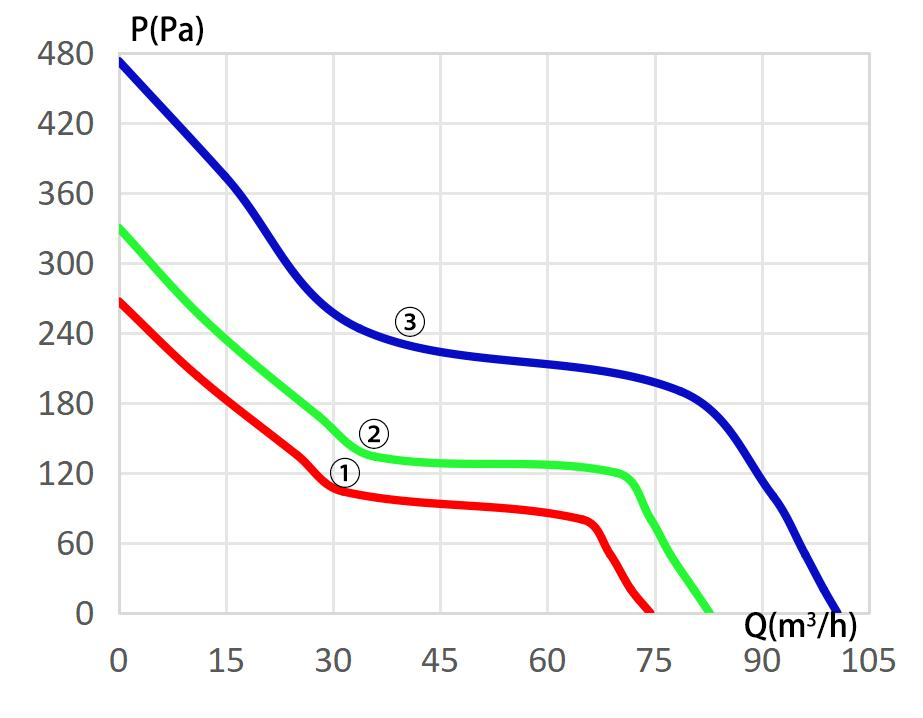
Airflow describes the volume of air a fan moves over time. Static pressure indicates the fan’s ability to overcome resistance from filters, heat sinks, ducts, grilles, and other components.
A fan’s maximum airflow rating alone does not guarantee that it will deliver the required airflow once installed in the actual system.
When available, provide:
- Required airflow and its unit, such as CFM or m³/h
- Estimated system resistance or required static pressure
- Pressure-drop data for filters or other components
- The operating point required by the cooling system
If these values have not yet been determined, share the system layout, cooling objective, and known restrictions. The supplier may be able to help evaluate suitable options, depending on the information available.
3. Confirm the Installation Dimensions
Space constraints often determine which fan models can be considered.
Include the following information in your RFQ:
- Required fan dimensions
- Available installation depth
- Mounting-hole positions
- Air inlet and outlet clearance
- Connector location and cable direction
- Any restrictions caused by nearby components
If you are replacing an existing fan, provide its model number and a photograph of the label. A dimensional drawing or sample can be even more helpful.
Do not assume that two fans with the same external dimensions are interchangeable. Their mounting details, electrical interfaces, airflow performance, and control functions may differ.
4. Specify the Electrical Requirements
Electrical compatibility should be confirmed before a model is selected.
Please identify:
- Rated voltage, such as 12 VDC, 24 VDC, or 48 VDC
- Acceptable operating-voltage range
- Maximum power consumption or current, if specified
- Starting and operating conditions
- Connector type and pin assignment
- Required speed-control or monitoring functions
Some applications require PWM speed control, a tachometer signal, an alarm output, or other control interfaces. If these functions are necessary, state them clearly rather than assuming they are included as standard.
For AC fans, provide the required supply voltage and frequency.
5. Describe the Operating Environment
The operating environment can significantly affect fan construction, material selection, protection measures, and validation requirements.
Consider providing:
| Parameter | Information to include |
|---|---|
| Temperature | Normal and maximum operating temperatures |
| Humidity | Expected humidity or condensation conditions |
| Water exposure | Splashing, rain, immersion, or other defined conditions |
| Dust | Dust concentration or expected exposure |
| Corrosion | Salt spray or corrosive atmosphere, if applicable |
| Vibration | Expected vibration or applicable test requirements |
| Altitude | Operating altitude or low-pressure requirements, if relevant |
Avoid using general descriptions such as “high temperature” or “waterproof” without defining the actual requirement.
For example, an IP rating must be matched to the required protection level and the complete installation conditions. It should not be assumed that a fan’s rating automatically applies to the entire enclosure.
For demanding applications, identify any required test standards, test levels, or acceptance criteria at the quotation stage.
6. Identify Noise, Speed, and Control Priorities
The fastest fan is not always the best choice. Higher speed may increase airflow, but it can also affect noise, power consumption, and system operating conditions.
Tell the supplier which factors are most important:
- Maximum airflow
- Low noise
- Low power consumption
- Temperature-based speed control
- Speed monitoring
- Fault alarm output
- Stable operation under changing loads
Where a fan will operate near people or in noise-sensitive equipment, specify the acceptable noise level and the measurement conditions if known.
If the project requires temperature-based control, explain the expected temperature range and the intended control behavior. The sensor, control logic, and fan interface should be evaluated together.
7. Clarify Quantity, Schedule, and Customization Needs
Commercial information is also essential for an accurate quotation.
Include:
- Prototype or sample quantity
- Estimated initial order quantity
- Expected annual demand, if available
- Target delivery schedule
- Required packaging or labeling
- Any customization requirements
- Expected production life or repeat-order schedule
If the project requires a custom fan, clarify whether you need a modified standard model or a new design.
Customization may involve dimensions, performance, connectors, control functions, materials, protection measures, or environmental requirements. These changes can affect engineering work, tooling, validation, cost, and lead time.
For this reason, it is helpful to separate the essential requirements from optional preferences.
8. Provide Drawings, Existing Samples, or Test Requirements
Supporting documents can help the supplier assess the project more accurately.
Useful attachments include:
- Product or installation drawings
- Existing fan datasheets
- Photographs of the installation space
- Airflow or thermal test results
- Electrical interface specifications
- Applicable environmental or qualification requirements
- Required inspection and documentation standards
If an existing fan is being replaced, share the original model number and explain the problem you are trying to solve. For example, the current fan may not provide enough airflow, may exceed the noise limit, or may not withstand the operating environment.
This gives the supplier a clearer basis for recommending alternatives.
A Practical RFQ Checklist
Before sending your industrial cooling fan inquiry, check whether you have included the following information:
- Application and equipment description
- Required airflow and static pressure, if known
- Installation dimensions and mounting details
- Voltage and electrical interface
- Operating temperature and environmental conditions
- Required control and monitoring functions
- Sample quantity, order quantity, and delivery schedule
- Drawings, existing model information, or relevant test requirements
Not every project will have all eight items available at the beginning. If some technical parameters are still being developed, explain what is confirmed and what remains open.
A capable supplier should be able to identify missing information and clarify the next steps rather than making unsupported assumptions.
How SenharFans Supports OEM Cooling Fan Projects
SenharFans supplies DC axial fans, DC blower fans, AC axial fans, and customized cooling fan solutions for industrial and equipment applications.
For OEM projects, our team can review application requirements, installation constraints, electrical interfaces, and environmental conditions to help evaluate suitable standard products or customized options.
Our development capabilities include engineering analysis, CFD simulation, rapid prototyping, testing, and production support. The specific development and validation process depends on the project requirements and the selected product.
To help us review your inquiry, please provide the application, key technical parameters, expected quantity, and any available drawings or reference models.
Contact SenharFans
Website: https://senharfans.com/
Email: sales@senharfans.com
WhatsApp: +86-138-1239-0890
Send us your requirements to discuss a suitable cooling fan solution for your project.
Frequently Asked Questions
What information is needed to request an industrial cooling fan quote?
At minimum, provide the application, required dimensions, supply voltage, estimated airflow needs, operating environment, and quantity. Drawings and existing model information can improve quotation accuracy.
Can I request a quotation if I do not know the required static pressure?
Yes. Share the equipment layout, cooling objective, available space, and any known restrictions. The supplier can review the available information and identify what additional data may be needed.
Can an industrial cooling fan be customized?
Depending on the product and project, customization may cover dimensions, airflow performance, electrical interfaces, control functions, materials, or environmental protection. Feasibility, cost, and lead time should be confirmed for each project.
How can I shorten the quotation process?
Provide complete technical information where available, clearly separate mandatory requirements from preferences, and include drawings, photographs, or an existing fan model whenever possible.
Does a higher airflow rating always mean better cooling?
No. The actual airflow depends on the interaction between the fan and the system resistance. Fan performance should be evaluated at the intended operating point, alongside temperature, noise, power, and installation requirements.